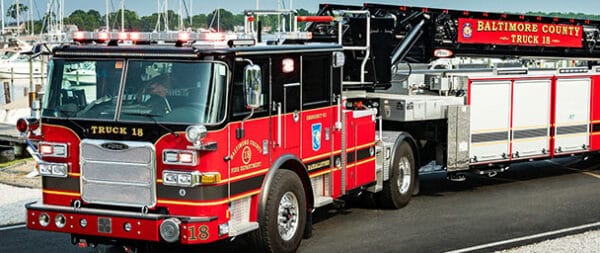
APPARATUS: THE SHOPS by Michael Huber

For fire departments across the country, one of the most difficult and often debated decisions is whether to continue repairing aging fire apparatus or to invest in replacements.
With budgets tight, demands high, and safety always the top priority, this choice can’t be made lightly. Knowing when to say “enough” to ongoing repairs and “yes” to new equipment is a key component of effective fleet management.
THE TRUE COST OF REPAIR
It’s common for departments to try and squeeze a few extra years out of an aging engine or ladder truck. On the surface, it might seem more cost-effective to keep repairing a vehicle that’s already paid off. However, the true cost of repair goes beyond the invoice from the maintenance shop.
Downtime is one of the most underestimated expenses. When a frontline unit is out of service—whether for days, weeks, or in extreme cases months—it forces the department to rely on reserve units, mutual aid, or delayed response. This can negatively impact service delivery and increase risk to both firefighters and the public.
Frequent breakdowns also contribute to operational fatigue. Crews lose confidence in unreliable equipment, which can affect morale and increase the stress of already difficult situations.
LIFE CYCLE CONSIDERATIONS
The National Fire Protection Association (NFPA) recommends that frontline apparatus be replaced after 15 years and reserve apparatus after 25 years. While some departments successfully stretch these numbers depending on call volume, it often comes with a trade-off in safety and performance.
Departments should be tracking the life cycle of each vehicle in their fleets, not just by years but by usage metrics—miles driven, engine hours, pump hours, and total repair costs. A good rule of thumb is this: If a vehicle’s annual repair costs exceed 10% of the cost of a new vehicle, it’s time to consider replacement.
SAFETY AND COMPLIANCE
Modern apparatus are built to higher safety and emissions standards. Older vehicles may lack rollover protection, air bags, electronic stability control, and clean diesel technology. This makes them more dangerous for crews and less environmentally responsible.
In addition, departments that want to remain compliant with NFPA standards or ISO rating criteria may find that maintaining outdated equipment works against them during audits or recertifications.
WHAT CAN BE FIXED AND WHAT SHOULDN’T
Not every repair signals the end of a truck’s useful life. Components like pumps, electrical systems, warning lights, and body panels can usually be serviced or replaced effectively. However, when repairs begin to affect core systems—frame integrity, suspension, drivetrain components, or the aerial structure—it may be a warning sign that you’re investing in a losing battle.
Rust, especially in critical frame or suspension areas, can be a death sentence for older vehicles. That is one reason you should insist on some type of frame protection. Personally, I believe galvanized frame rails are superior. Similarly, persistent electrical issues in older wiring harnesses often become timeconsuming and costly to troubleshoot.
Another factor is parts availability. As manufacturers change platforms or discontinue product lines, it becomes harder—and more expensive—to source replacement parts for older apparatus, not to mention manufacturers going out of business like we have seen in the past.
BUDGETING AND LONG-TERM PLANNING
The cost of a new fire apparatus is substantial. Depending on the type and customization, engines and aerials can range from $800,000 for an engine to well over $2 million for a ladder truck. But, departments don’t have to be caught off guard.
A long-term capital replacement plan is the best way to prepare. Departments should build a rolling 10- to 15-year forecast that maps out replacement cycles for each piece of apparatus. This allows time for grant applications, budget approvals, and vehicle specifications well in advance of critical failures. In the case of government, it is difficult to budget outside of the political cycle; as politicians change, so do their priorities.
Leasing and cooperative purchasing programs can also help departments manage the financial burden of replacement by spreading costs over time and leveraging group buying power.
CONSIDERATIONS
A structured apparatus evaluation process should combine technical inspection, financial analysis, and operational review. Many departments use a weighted scoring system or checklist that incorporates these criteria to guide decisions.
1. Age and service life
- Frontline apparatus: Typically replaced at 15 years.
- Reserve apparatus: Typically replaced by 25 years.
- Follow NFPA 1910, Standard for the Inspection, Maintenance, Refurbishment, Testing, and Retirement of In-Service Emergency Vehicles and Marine Firefighting Vessels, recommendations for apparatus retirement.
- Why it matters: Older apparatus may not meet current safety, performance, or emission standards and may lack compatibility with newer equipment.
2. Maintenance and repair history
- Frequency of repairs: Are breakdowns becoming routine?
- Annual maintenance costs: Are they exceeding 10% to 15% of replacement cost?
- Repeat failures in major systems—e.g., engine, transmission, electrical.
- Why it matters: High repair frequency increases downtime, reduces reliability, and can signal a decline in overall system integrity.
3. Downtime and operational impact
- How often is the apparatus out of service?
- Is it causing delays in response or reliance on reserve or mutual aid units?
- Why it matters: Unavailable apparatus can compromise emergency response, increase liability, and strain other units or neighboring departments.
4. Safety standards and compliance
- Does the apparatus meet current NFPA 1900, Standard for Aircraft Rescue and Firefighting Vehicles, Automotive Fire Apparatus, Wildland Fire Apparatus, and Automotive Ambulances, safety standards?
- Are critical safety features missing (air bags, rollover protection, stability control)?
- Is it compatible with self-contained breathing apparatus (SCBA) brackets, warning lights, or seat belt requirements?
- Why it matters: Apparatus without modern safety features increase risks to firefighters and may reduce insurance or ISO ratings.
5. Performance and reliability
- Decrease in pump performance or water tank issues?
- Aerial drift, turntable delays, or lifting capacity concerns?
- Slow or unreliable engine start, shifting, or braking?
- Why it matters: Performance deficiencies reduce operational effectiveness and increase firefighter exposure during emergencies.
6. Parts availability and manufacturer support
- Are OEM parts still available?
- Has the chassis or body manufacturer gone out of business or changed product lines?
- Why it matters: Difficulty sourcing parts increases repair time and costs. Unsupported apparatus may be unrepairable in the future.
7. Technological obsolescence
- Are onboard electronics (e.g., scene lighting, radios, MDTs, multiplex systems) outdated or incompatible with current systems?
- Why it matters: Technology gaps can affect communications, situational awareness, and interagency coordination.
8. Structural integrity
- Is there frame or subframe corrosion?
- Are there visible signs of body separation, rust, or stress fractures?
- Why it matters: Structural damage may be beyond safe repair and could result in catastrophic failure during use.
9. Operational fit
- Has the mission or staffing model changed?
- Can it still access new developments, turnarounds, and bridges in your response area?
- Is the apparatus too large, too small, or not configured for current needs?
- Why it matters: Apparatus must match current and anticipated response demands, including urban, rural, and specialty operations.
10. Cost-benefit analysis
- Compare projected repair costs vs. replacement cost.
- Include soft costs: training, downtime, reserve use, and liability exposure.
- Consider grants, financing, and cooperative purchasing opportunities.
- Why it matters: Sometimes, the long-term costs of keeping an old truck exceed the cost of replacing it, especially when factoring in safety and service delivery.
Bonus: crew feedback
- Operator and crew input on drivabili- ty, reliability, and comfort.
- Reports of low confidence in the vehicle or near-miss incidents.
- Why it matters: The people who rely on the apparatus daily often detect problems early and can provide practical insight into their condition and suitability.
The decision to repair or replace should never rest on a single person. Fleet managers, operators, crew, finance staff, and command leadership all bring essential perspectives to the table. Operators often notice problems first, while maintenance teams can provide detailed cost histories and projections. Together, this information builds a clearer picture of when the cost of repairs is no longer justifiable.
At some point, every department faces the inevitable question: Is it time to move on from this apparatus? While the answer isn’t always simple, approaching the decision with data, safety considerations, and long-term planning leads to smarter, safer outcomes. Repairs have their place, but there’s wisdom in recognizing when replacement is the right call—for the equipment, the department, and the community it serves. Replacing a fire truck is a major investment but, when made at the right time, it protects lives, improves service, and saves money in the long run.
related content
- The Critical Importance of Choosing the Right Body Shop for Fire Apparatus Repair
- The Role of Fire Apparatus in Crew and EVT Safety
- How to Handle Warranty Repairs and Maximize Manufacturer Support
- Fire Apparatus Technology: The Impact on Repair and Maintenance
- Ensuring Safety and Function: The Crucial Role of Fire Apparatus Factory Inspections
- Maximizing the Efficiency of Your Fleet
MICHAEL HUBER is a fire apparatus driver/ operator and fire apparatus fleet manager for the Baltimore County (MD) Fire Department.