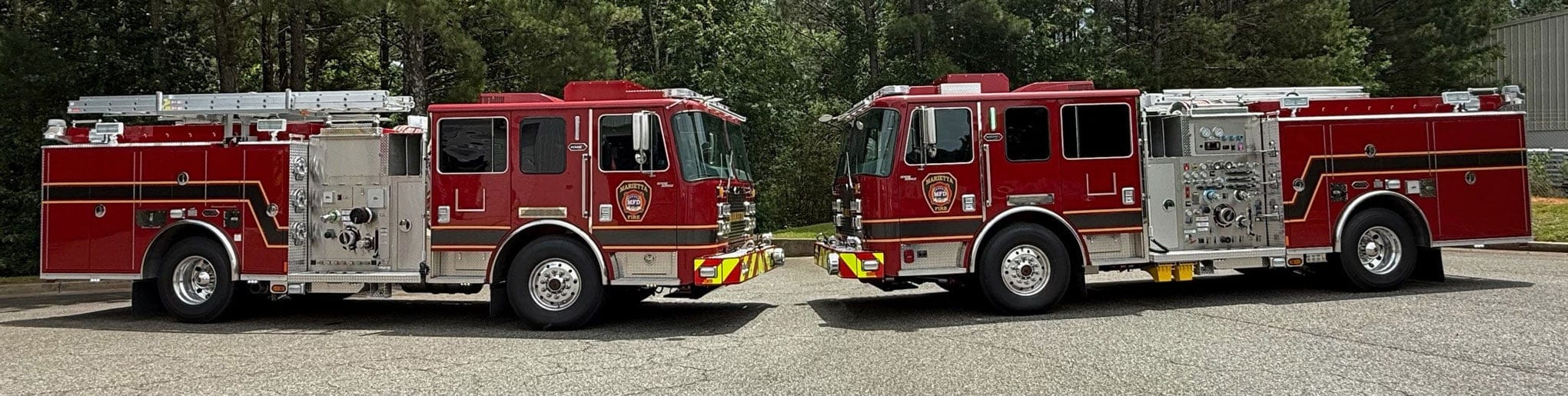
The Marietta (GA) Fire Department has placed two new KME Severe Service custom pumpers at Station 55 and Station 56, replacing two older KME engines. The department’s front line fleet consists of six pumpers with the KME brand. The department has 133 paid full-time firefighters protecting 68,000 residents and 7,500 businesses in a 22.75-square-mile coverage area.
Marietta Fire also runs a KME 103-foot aerial ladder truck, a KME Predator tractor-drawn aerial (TDA), a KME heavy rescue truck, a light rescue truck and an air truck built by local dealers on Ford F-350 cabs/chassis, a Ford F-350 command vehicle, and a Yanmar utility terrain vehicle (UTV) housed among its six fire stations.

Ryan McDonel, sales representative at FireLine Inc., who sold the custom pumpers to Marietta Fire, says that the identical pumpers are built on KME Severe Service cabs and chassis with seating for six firefighters, three of them in H.O. Bostrom self-contained breathing apparatus (SCBA) seats with SecureAll brackets; with extruded aluminum bodies; 455-horsepower (hp) Cummins X12 engines; and Allison 4000 EVS automatic transmissions. Wheelbases on the rigs are 181 inches, overall lengths are 30 feet, and overall heights are 8 feet 4 inches.
The two pumpers were funded by a special-purpose local-option sales tax (SPLOST), McDonel notes, being similar to Marietta’s previous KME pumpers, but enhanced with the latest advances in technology for the chassis, bodies, components, and lighting. He adds that the new rigs are designed for consistency with Marietta Fire’s existing fleet, with no major changes to their equipment storage, which helps reduce training time and improves crew readiness.

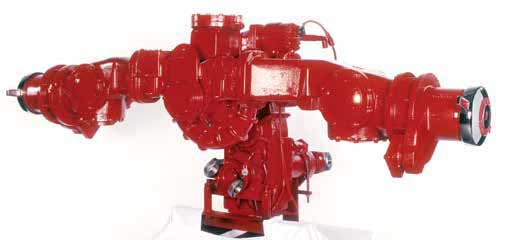
He points out that the pumpers have 2,000-gallon-per-minute (gpm) Hale Qmax side-mount pumps, 500-gallon polypropylene water tanks, 40-gallon polypropylene foam tanks, and Elkhart 240-95P foam eductors. The rigs carry three crosslays, each of which hold 200 feet of 1¾-inch hoses.
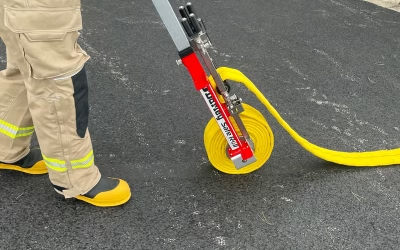
Electric booster reels on each rig hold 100 feet of 1-inch booster line in the left side dunnage area, he says, while the hosebeds hold 1,000 feet of 5-inch large diameter hose (LDH), 600 feet of 3-inch hose, 200 feet of 2½-inch hose, and 400 feet of 1¾-inch hose.

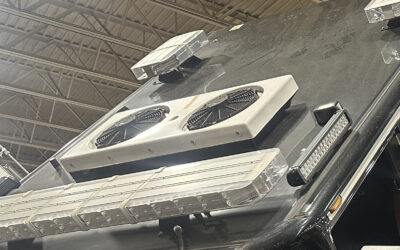
The rigs have Coleman PolarMach auxiliary air conditioning systems, SetCom intercom systems, Harrison 8-kW hydraulic generators, and Zico electric heavy duty single-arm drop-down ladder racks on the top right side of the bodies that hold Duo-Safety 24-foot two-section extension ladders, 14-foot roof ladders, and 10-foot folding ladders.
Lighting includes Whelen LED M6 warning lights, FireTech 72-inch LED brow lights with integral marker lights, Whelen 81-inch Freedom IV LED lightbars, two FRC Spectra Max LED scene lights on telescoping poles at the rear of the cabs, and two FRC Spectra Max LED scene lights on the bodies above the L1 and R1 compartments.
ALAN M. PETRILLO is a Tucson, Arizona-based journalist who has served as a newspaper reporter, editor, and magazine writer and is a member of the Fire Apparatus & Emergency Equipment Advisory Board. He served 22 years with the Verdoy (NY) Fire Department, including in the position of chief.