APPARATUS: THE SHOPS by Michael Huber
 In the fire service, fire trucks are more than vehicles. They are lifelines. When tones drop, crews rely on their apparatus to perform without hesitation.
Every pump, aerial device, light, and siren must be ready for immediate service. But, behind that reliability is a specialized group of professionals whose skills often go unnoticed: apparatus technicians.
Today, these technicians are facing a challenge bigger than a seized pump or a faulty electrical system: the challenge of succession. Many seasoned fire apparatus mechanics are approaching retirement, and the next generation is still finding its way into the shop. Without a focused effort to recruit, train, and mentor newcomers, fire departments and municipalities risk a serious talent gap.
We’ve all seen the headlines—fire departments, large and small, are facing equipment breakdowns that reduce service to the very taxpayers who depend on them. This kind of negative publicity helps no one. As leaders, it’s our responsibility to ensure our apparatus and equipment are always ready so the public never has to question our ability to respond. We must be proactive, not reactive, to keep our department’s name out of those headlines.
This is the story of why training the next wave of technicians is not just a shop issue. It’s a mission-critical priority.
THE SKILLS SHORTAGE IS REAL
Across North America, vocational trades are feeling the pinch of an aging workforce. In apparatus maintenance, the situation is amplified by the niche nature of the job. A skilled apparatus technician isn’t just a diesel mechanic. He must also understand firefighting systems, National Fire Protection Association (NFPA) standards, plumbing, hydraulics, electronics, fabrication, welding, and even elements of IT networking for modern vehicle diagnostics.
There is no school that will teach you everything you need to know to work on fire apparatus. You cannot just pull someone from an auto shop and drop him into our fire maintenance facility without months, sometimes years, of specialized training.
By my estimate, it takes three to five years for a new hire to become a fully proficient fire apparatus technician, capable of operating on his own. The pool of candidates who can make that leap is thin, and the future looks challenging.

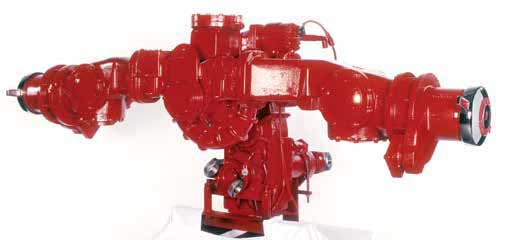
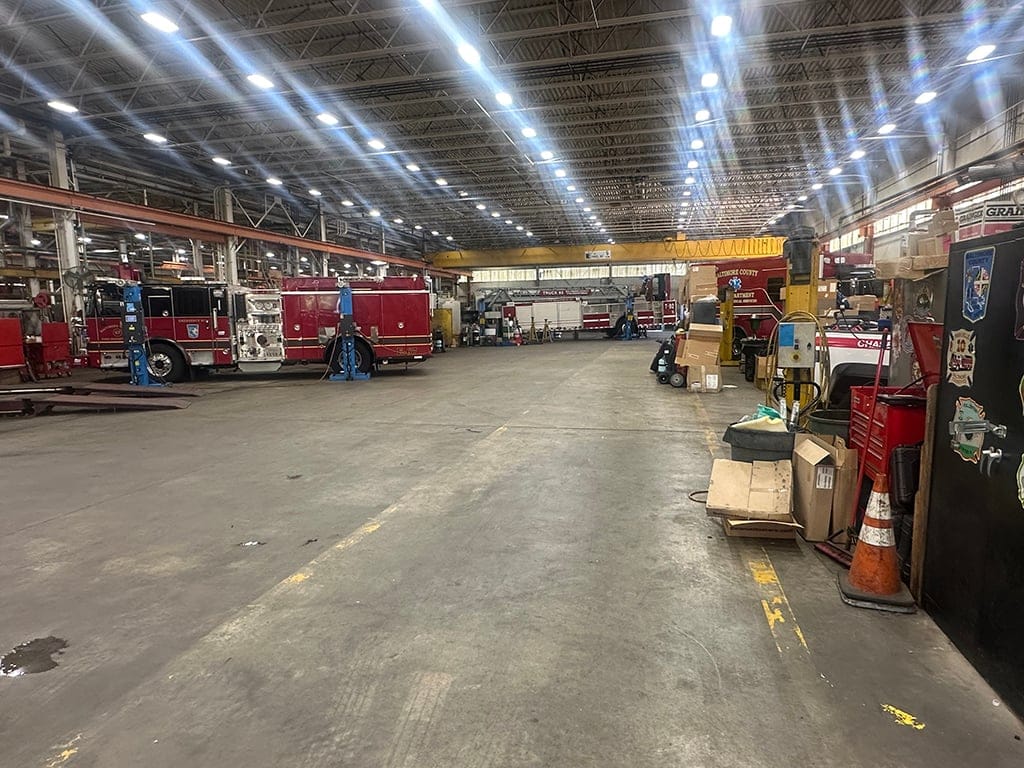
1 Training the next generation of apparatus technicians is not optional. It’s a strategic necessity that safeguards firefighter safety, public trust, and operational readiness. (Photo by author.)
It is significantly harder for governmental agencies to compete with the salaries that dealerships are paying. Private industry has much more latitude with salaries than government. I have witnessed technicians jump from dealership to dealership on a monthly basis, depending on who is paying the most.
One of the greatest challenges, especially with a large metropolitan fleet, is maintaining coverage. Our work doesn’t stop at 5 p.m. Supporting a department that operates 24 hours a day, seven days a week, 365 days a year demands around-the-clock support. This can be challenging, to say the least. It requires finding dedicated, mission-focused technicians who are willing and able to always keep the fleet operational.
WHY RECRUITMENT STARTS IN THE COMMUNITY
Recruiting the next generation often starts before the job posting. Forward-thinking departments partner with the following:
- High schools with vocational programs: Offering shop tours, career days, and ride-along visits in the maintenance facility. Some even offer summer internships.
- Trade schools and community
- colleges: Establishing internships or co-op placements that give students hands-on exposure.
- Military transition programs: Many veterans bring mechanical and logistical skills that translate well to apparatus work.
These outreach efforts do more than just fill an applicant list—they build awareness that the career exists at all. Not too many people grow up thinking they want to be a fire apparatus technician. They need to be educated on why it is a viable and rewarding career.
BUILDING A STRUCTURED TRAINING PROGRAM
Once you have candidates, the real work begins. Unlike automotive or heavy truck repair, fire apparatus maintenance requires technicians to master systems that are unique to the fire service. A structured training program should include the following:
- Foundational mechanical skills: Diesel engines, drivetrains, suspension systems, and braking systems.
- Fire pump and water system maintenance: Operation, testing, and NFPA 1911, Standardfor the Inspection, Maintenance, Testing, and Retirement of In-Service Emergency Vehicles (now NFPA 1910, Standardfor the Inspection, Maintenance, Refurbishment, Testing, and Retirement of In-Service Emergency Vehicles and Marine Firefighting Vessels), compliance.
- Hydraulics for aerial devices: Understanding boom systems, outriggers, safety interlocks, and load testing.
- Electrical and lighting systems: From basic circuits to modern multiplexed wiring and CAN bus diagnostics.
- Special equipment integration: Generators, scene lighting, foam systems, and communication gear.
- Safety and compliance: Occupational Safety and Health Administration (OSHA) requirements, NFPA standards, and manufacturer service bulletins. While hands-on training is irreplaceable, incorporating online learning modules, manufacturer Webinars, and certification courses allows technicians to learn at their own pace while still covering mandatory knowledge. I have found that when making major fleet purchases, it is possible to negotiate manufacturer-provided training at no cost or with a low-cost option.
MENTORSHIP: THE BRIDGE BETWEEN THEORY AND PRACTICE
One of the most effective training tools is pairing new hires with veteran technicians. The seasoned tech not only teaches mechanical skills but also passes down “shop wisdom” that isn’t in any manual-how to troubleshoot under pressure, where to check first for recurring issues, and how to balance repair urgency with apparatus availability for the department.
Choosing the right mentor for a mechanic is critical because the mentor sets the tone for both the trainee’s technical development and their professional habits. A skilled mentor doesn’t just pass along mechanical know-how-he models troubleshooting techniques, safety practices, work ethic, and the pride that comes with doing the job right the first time. If the wrong person is chosen-someone impatient, disorganized, or resistant to new ideas-the trainee may pick up bad habits that are hard to break and could even compromise apparatus reliability. The ideal mentor has deep technical expertise, strong communication skills, and the patience to guide without micromanaging, ensuring that the next generation of mechanics inherits not just the skills but the values essential to keeping fire apparatus safe and operational.
CERTIFICATIONS MATTER, BUT EXPERIENCE IS GOLD
Industry-recognized certifications like National Institute for Automotive Service Excellence (ASE) and emergency vehicle technician (EVT) designations provide measurable benchmarks for skill development. Encouraging new technicians to pursue these certifications ensures a baseline of competency and professionalism.
Certifications alone, however, do not make a great apparatus technician-experience does. Departments should strive for a balance of book knowledge and hands-on work.
KEEPING TRAINING CURRENT IN A TECH-DRIVEN ERA
Today, our fire apparatus are rolling computers. Multiplexed wiring systems, emissions control technology, and advanced telematics require technicians to be as comfortable with a laptop as with a wrench.
This means training must be ongoing, instead of a one-and-done event. Annual refreshers, attendance at manufacturer service schools, and peer-to-peer knowledge exchanges keep apparatus technicians’ skills sharp.
RETENTION: THE OTHER HALF OF THE EQUATION
Training new technicians takes time, effort, and money-so retaining them is just as important as recruiting them. Competitive pay, opportunities for advancement, and a positive shop culture go a long way in keeping talent. One local jurisdiction provides benchmarks over time, and when those benchmarks are obtained and pending positive reviews, you receive a take-home/ on-call vehicle.
Recognition also matters. Many apparatus technicians work behind the scenes, rarely seen by the public. Highlighting their contributions in department newsletters, awards ceremonies, or social media posts helps build pride and interest in the profession.
THE STAKES ARE HIGH
An undertrained or understaffed maintenance shop doesn’t just risk budget over- runs-it risks lives. An apparatus out of service for preventable repairs leaves a hole in a department’s operational capability. A mechanical failure on scene can endanger firefighters and civilians alike.
By investing in training for the next generation now, departments can ensure that when these current experienced technicians hang up their wrenches, a capable and confident team will be ready to take their place.
Training the next generation of apparatus technicians is not optional. It’s a strategic necessity that safeguards firefighter safety, public trust, and the operational readiness of every call. Whether it’s through school outreach, structured apprenticeships, or ongoing skill building, the fire service must view technician training with the same urgency it gives to firefighter training-because when the call comes in, both the crew and the apparatus must be ready to respond.
MICHAEL HUBER is a fire apparatus driver/operator and fire apparatus fleet manager for the Baltimore County (MD) Fire Department.