APPARATUS: THE SHOPS

Understanding your rig, and your relationship with the shop, is as critical to readiness as training or tactics. Every fire officer knows that when the tones drop, the company’s success depends on the rig starting, moving, and working the way it’s supposed to.
Every firefighter relies on his fire apparatus without a second thought, until the day it doesn’t cooperate. The maintenance shop may not wear turnout gear, but its work is as vital to operations as any suppression crew’s.
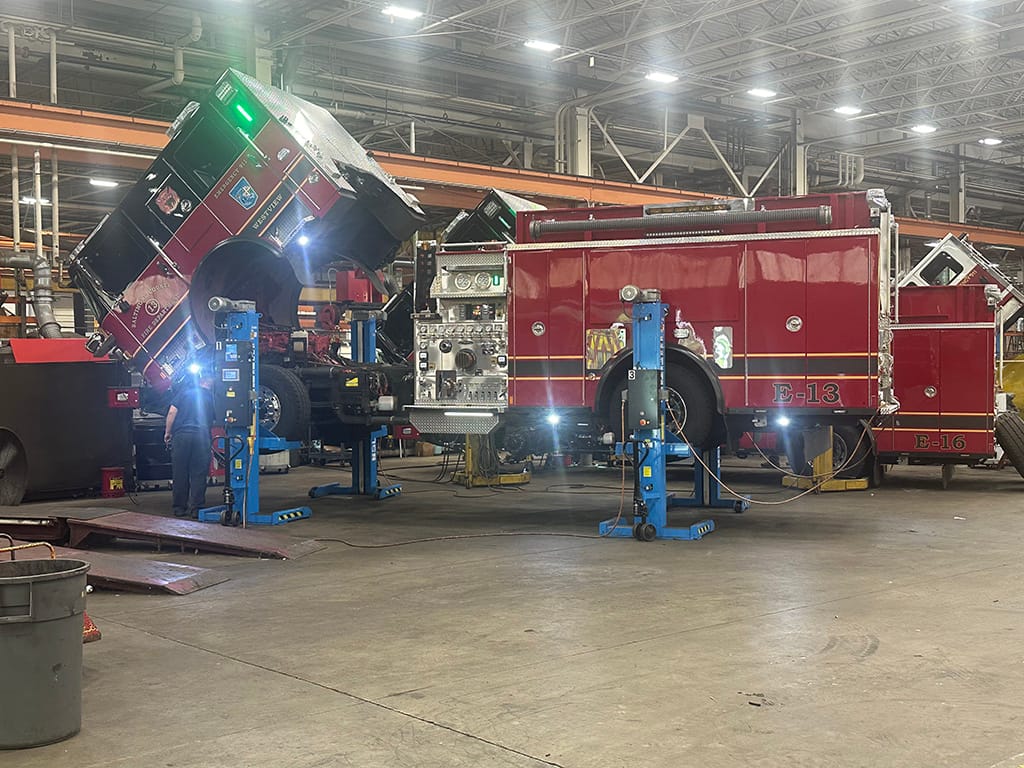
Behind those closed bay doors, technicians diagnose, repair, and rebuild the very lifelines that carry us to the scene. Yet, as any technician will tell you, many of the problems they fix could have been prevented, or at least caught early, with better care and communication from the end user.
The relationship between operations and maintenance is one of the most important, and most overlooked, partnerships in the fire service. Here are a few lessons from the shop floor that every officer should know about their apparatus.
THE APPARATUS IS PART OF YOUR CREW
Treat the rig like a member of your company. Just as you learn the strengths and weaknesses of each firefighter, you should know your apparatus just as well.
Every vehicle has a personality—the slight vibration under load, the way the pump sounds at idle, and how the transmission shifts when it’s cold. When something feels off, trust your instincts.
A small air leak or a weak battery can become a major problem fast. Officers who take ownership of their rigs—and encourage their crews to do the same—catch issues early and keep the fleet reliable.
DAILY CHECKS ARE MORE THAN A CHECKBOX
Done right, daily checks are an early warning system—not just paperwork. Technicians repeatedly stress that the simplest maintenance is the most important: the daily and weekly checks performed at the station. Unfortunately, those checks can often become routine to the point of ritual, and crews can become complacent.
Thorough inspections detect problems before they sideline your company. A small coolant loss, uneven tire wear, and a hesitant starter are clues worth acting on. Set the tone that checks matter. Companies that take apparatus checks seriously see fewer failures and, as a result, less downtime.
COMMUNICATE CLEARLY WITH THE SHOP
The fastest way to delay a repair is with a vague service request:
- “Truck won’t start.”
- “The light is out.”
- “It’s making a funny noise.”
When you report an issue, be specific by providing the following:
- Unit number and location of the problem.
- When and how often the problem occurs.
- Any patterns (weather, load, warm-up time).
- Steps already taken.
Photos or short videos are especially helpful. Think of it as a handoff to a team- mate—the better the information, the faster the fix.
Whether repairs are submitted through paperwork or the computer system, a simple phone call for critical items can save significant time and frustration down the road.
PREVENTIVE MAINTENANCE HAS A PURPOSE
Preventive maintenance (PM) is not optional. It’s the foundation of fleet reliability. It’s easy to become frustrated when the shop pulls your frontline rig for a service interval during a busy week, but those few hours in the bay prevent days or weeks out of service later. I absolutely understand that no one wants to change into a reserve unit, but it is a necessary evil.
Officers can help by planning around PM schedules, ensuring units arrive on time, and communicating upcoming operational needs. Skipping maintenance never saves time. It only defers the breakdown.
ELECTRONICS RULE THE MODERN RIG
Modern fire apparatus are more complex than ever. Multiplex wiring, idle reduction systems, and power management modules mean the smallest voltage drop can shut down critical functions.
Encourage your crews to do the following:
- Power down unnecessary devices when parked.
- Wait for full system boot-up before operating electronics.
- Report battery and charging issues immediately.
These habits reduce strain on systems and give technicians cleaner data to work from.
TREAT RESERVE APPARATUS LIKE FIRST-LINE UNITS
When your first-out rig goes down, the reserve steps in—often for longer than expected. A neglected reserve quickly becomes a liability. In a large municipal fleet, one of the most frustrating things is the lack of care and attention the field gives reserve apparatus. Most crews do not feel the impact until they need a reserve apparatus and nothing is available.
Conduct a full check just as you would your assigned unit. Note discrepancies, communicate them, and leave the reserve in better condition than you found it. The next company that needs it will thank you, and you may even be a part of that company tomorrow.
THE SHOP IS YOUR PARTNER, NOT YOUR ADVERSARY
Both sides share the same mission: keeping the community safe. It’s easy for tension to build between operations and maintenance. Crews feel frustrated when rigs are out of service; technicians feel pressure to do more with less.
Building mutual respect goes a long way. Officers who visit the shop, introduce themselves, and ask questions often find repairs happen faster and communication improves. And, an occasional box of donuts certainly doesn’t hurt.
Remember: The shop isn’t keeping your rig from you. They’re keeping it safe for you.
PRIDE STARTS AT THE COMPANY LEVEL
A clean, organized apparatus reflects pride and professionalism. Officers set the tone.
When the crew wipes down the cab, keeps compartments squared away, and reports issues immediately, it shows respect for both the equipment and the people who maintain it. That pride directly affects performance. A well-kept rig runs better, lasts longer, and reinforces a culture of readiness.
SHARED RESPONSIBILITY KEEPS THE FLEET ROLLING
Apparatus maintenance isn’t just a logistics function; it’s a safety function. A reliable fleet allows firefighters to focus on the mission instead of the machinery. A company officer’s influence over apparatus readiness is enormous. Understand how your rig works, communicate clearly, respect the shop’s process, and set the expectation that your company takes pride in every piece of equipment it operates.
After all, every fire starts and ends with the turn of a key or the push of a button or switch—and the professionals in the shop are the ones who make sure that the apparatus always work.
MICHAEL HUBER is a fire apparatus driver/ operator and fire apparatus fleet manager for the Baltimore County (MD) Fire Department.