By Kevin Roberts
Warning, this article is about risk. If you live in an echo chamber, you may think you are safe due to your behavior. If you wish to maintain that mindset, look away … now.
First
What does “real” mean? From Oxford Languages:
1 – “actually existing as a thing or occurring in fact; not imagined or supposed.”
2 – “of a substance or thing; not imitation or artificial; genuine.”
For the purpose of this article, I will employ the following: Reality versus perception, objective versus subjective.
Second
Absolutes do not exist. You are probably alive today because of that simple fact. It is in probability that we commonly find safety.
To Proceed: Do you drive more recklessly on dry roads than you do on wet roads?
If you either said, “Of course not” or if you think there are only two answers to that question, this article is probably not for you, but it is certainly about you. Your answer to the above question will depend on your devotion to, and your practice of, self-awareness.
If you actually think there are only two answers to that question (yes or no), you would make a fine Senate Committee member. These people make their living by demanding yes or no answers to inane questions about complex situations that demand nuanced analysis.
If you answered, “Of course not”, and are still reading, I have another question for you.
Do you drive more carefully on wet roads than you do on dry roads?
Notice that consistency demands similar answers.
I ask this question in class occasionally and find that the most common answer to the first question is “Probably.”
I suspect this is because the average automotive technician practices a higher level of self-awareness than the average senator. (Honest self-awareness does not generally get you votes)
In this world of risk, you can hope, or you can plan. If you want to be one who plans, one of the ways is to purchase insurance.
There are two types of insurance. Both are “paid for” before an “incident”.
One protects you after the fact. It is reactive. This is a normal government required and regulated insurance policy.
You get this normal insurance by purchasing a policy from a company that will contribute financial help to protect you from mistakes or bad luck. This provides liability safety.
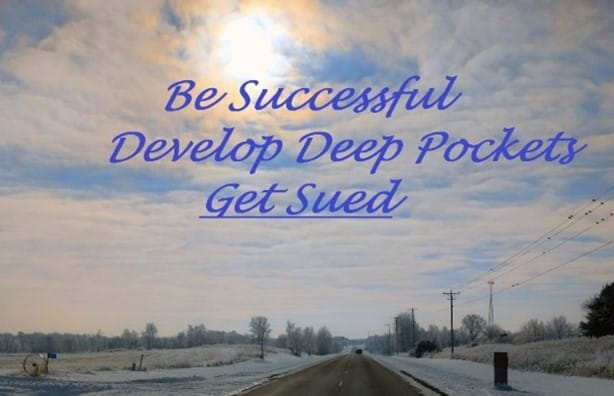
But unfortunately, normal insurance can motivate bad actors to make false claims. This, known as the deep pockets law, can simply make you a target. The larger your department or organization, the larger the target you present to others. This is a side of success that never seems to make it to a motivational poster.
But there is another type of insurance that I will call, “creative insurance”.
Creative insurance means being proactive. It is found in following, “Best Practices”. Its goal is to prevent an “incident”. There is distinction (with some overlap) between real and liability safety.
In the area of Emergency Vehicle Service, real safety consists of a well-designed rig that is properly maintained, properly repaired on a timely basis when repairs are needed and operated in a safe manner by the crew using the rig. Let’s look at an ambulance as an example.
This is the rig that you want to be available should one of your loved ones need medical transport. To accomplish this real safety takes time, money, and expertise. For example:
Design: Certain rigs are inherently more dependable and robust than others. How does a purchasing agent discriminate? He needs to educate himself about the differences between the type of rig, the chassis manufacturers, and the FSAMs. One of my customers was told by his ambulance dealer to not expect a certain Inter Facility Transport rig to exceed 150K-mile life cycle.
Maintenance and Repair: Certain shops are better staffed and equipped to understand the operational needs and distinctives of Emergency Vehicle operation. The Authority Having Jurisdiction (AHJ) must be educated in how to identify a service provider that can accomplish what is needed.
Operation: Even though driving has had a broad cultural application for the last several generations, it is not as ubiquitous as it once was. Plus, American drivers have always overrated their skill set. (Today, about 80% of drivers rate themselves as above average.) These items alone provide the AHJ with a daunting task. But even having the best rig maintained by the best shop and operated by the best crew will not provide, in an absolute sense, the real safety that is the AHJ’s goal. Remember, there are no absolutes. This rig shares the highways with the public. Driving in traffic dramatically increases the possibility of an “event” due to variations in the individual skill set of each driver with whom your crew shares the road. (The common clay of the new west)
When all is said and done, there is no absolute protection against bad outcomes. We must perform our due diligence to minimize our exposure. For that we need to play the game.
Liability safety is a game that the culture plays with itself as it tries to make the world nicer. If bad luck pulls you into this game, you need to know the rules. Subjective perception often trumps objective reality. Also, people can be manipulated. Even as we like to think we are just as careful on dry roads as wet, we like to think that, in the event of an accident, blame must always be assigned.
Money is not only a tool, it is a target for bad actors. Our legal system incentivizes the public by offering, “You don’t pay unless we win.” It is the offering of a lottery ticket at no cost.
Having insurance is necessary, but only for liability safety. Fleets need real safety. The kind that comes from exercising due diligence, awareness, and asking, “What if?” instead of “What now?” Under which category does technician certification fall? Clearly both. A technician cannot go through the certification process without improving his proficiency. Plus, the paperwork that comes with certification provides one factor that mitigates liability. Obviously, we need real safety: prevention; not just liability safety: cure.
In order to get that real safety, our team must be made up of certain individuals. These individuals must have traits that will be introduced in the next article.