The City of West Palm Beach is located in southeast Florida and is the county seat of Palm Beach County. The city sits just west of the barrier island of Palm Beach, across the Lake Worth Lagoon.
The West Palm Beach Fire Department was established in 1894 as the “Flager Alerts,” a volunteer agency, making it one of the oldest fire departments in the state. Today the department is an all-hazards response career agency, providing fire protection, emergency medical service, hazardous materials mitigation, and technical rescue operations. It’s staffed with over 300 uniformed firefighters, over 90% of whom are paramedics, operating out of nine fire stations to serve an area covering over 58 square miles of land and waterfront. The department also provides mutual aid assistance to surrounding communities when requested.
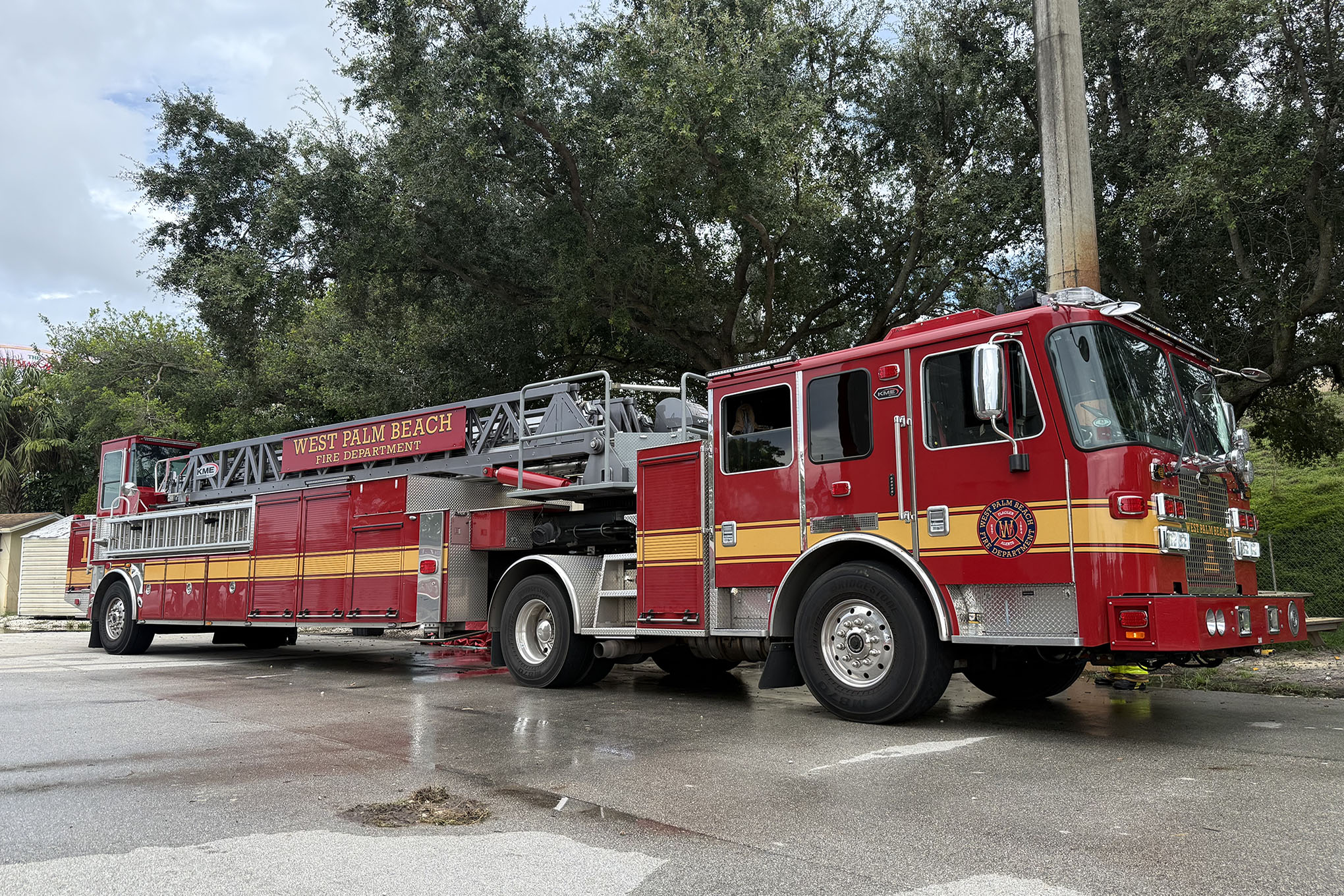
An overview of the West Palm Beach (FL) Fire Department Ladder Company 1’s 2023 KME tractor-drawn aerial (TDA).
The central downtown area of West Palm Beach boasts a historical district with tight streets and alleyways with dense high-rise development. The department sought out a way to maneuver around those narrow residential and commercial streets and increase its capabilities of transporting firefighting and rescue equipment.
With the help of KME and its own research, the department designed an apparatus to meet its needs. The 2023 Aerial Cat tractor-drawn aerial ladder (TDA) was the answer to provide numerous functions, and it’s the first TDA purchased by the department.
The truck has a Severe Service medium-four-door (MFD) cab made of heavy-duty aluminum plate and extrusions. The cab has seating for four firefighters, an officer and driver and two firefighters in the crew cab.
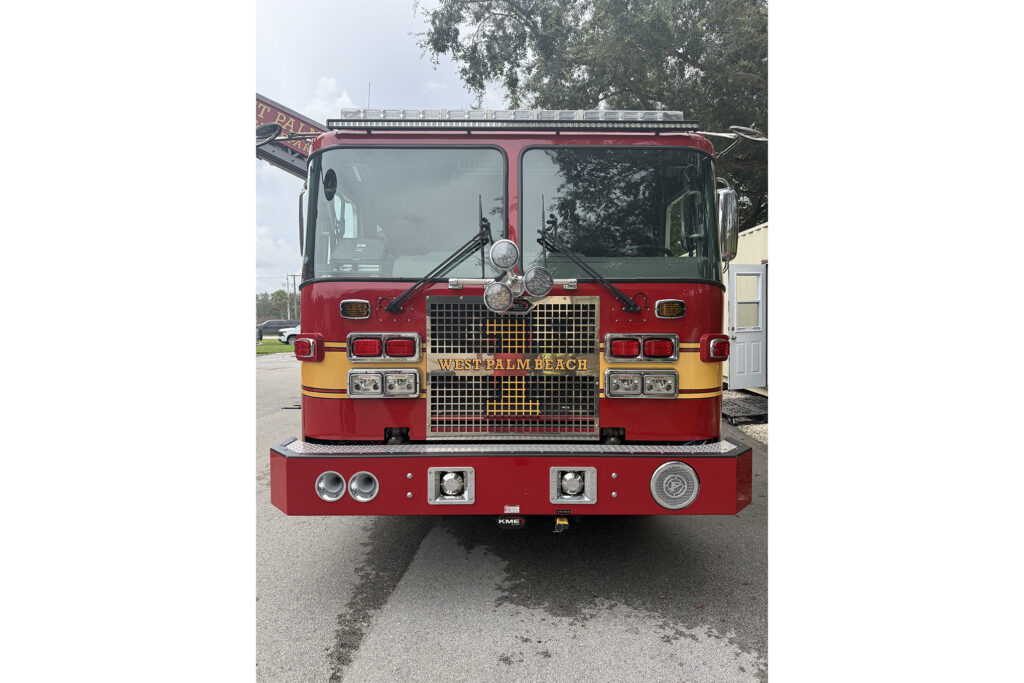
The front view of the rig with a Federal Q2B siren and air horns recessed into the bumper.
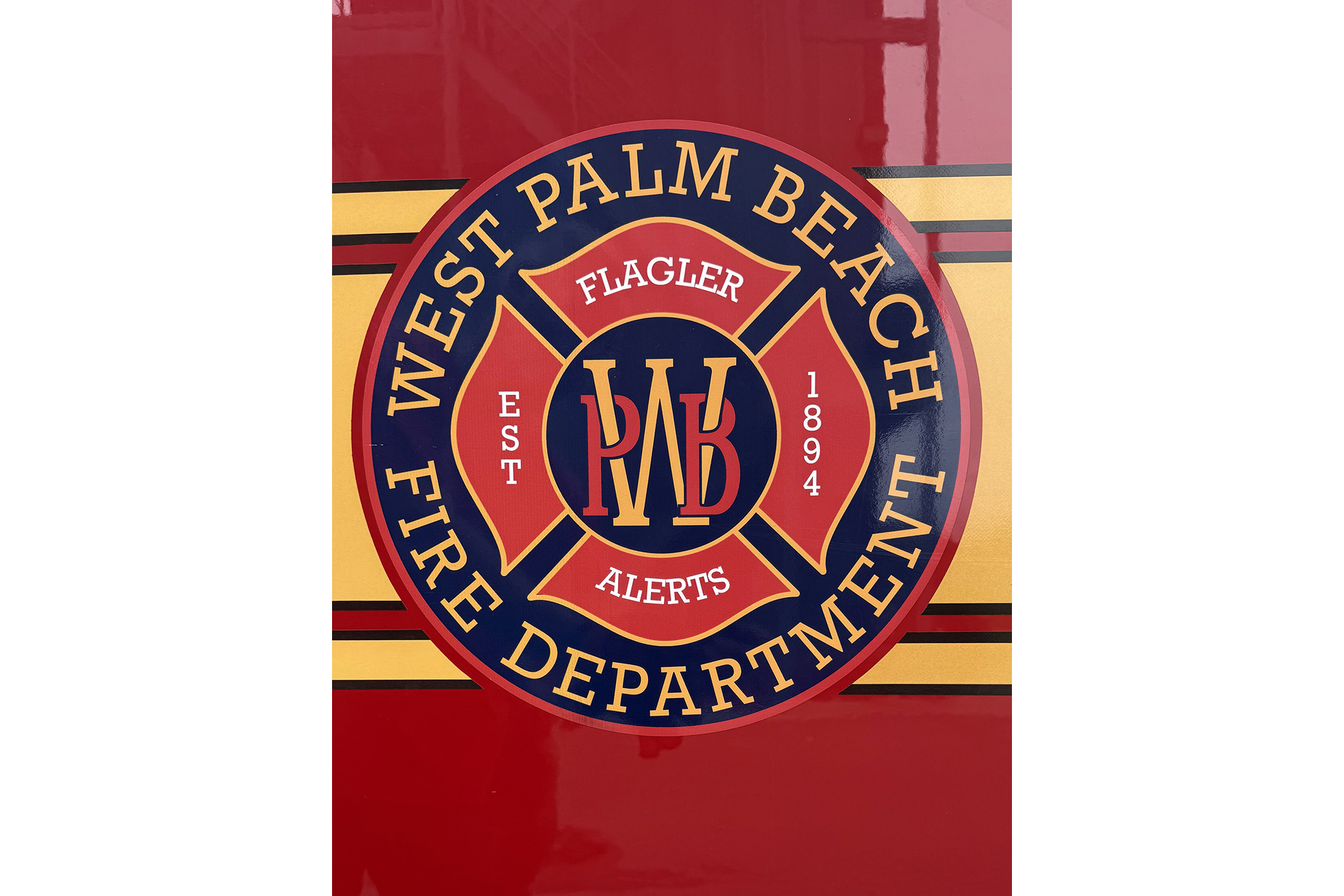
The department logo on the cab doors pays tribute to the original volunteers, the Flager Alerts.
The 101-foot heavy-duty aerial ladder is assigned to Ladder Company 1 which is located downtown and must navigate tight areas requiring this apparatus type’s rear steering capabilities. The aerial ladder features integrated LED lighting running up from the bed to the fly sections, to assist in better climbing and dismounting the tip over parapets during periods of low visibility.
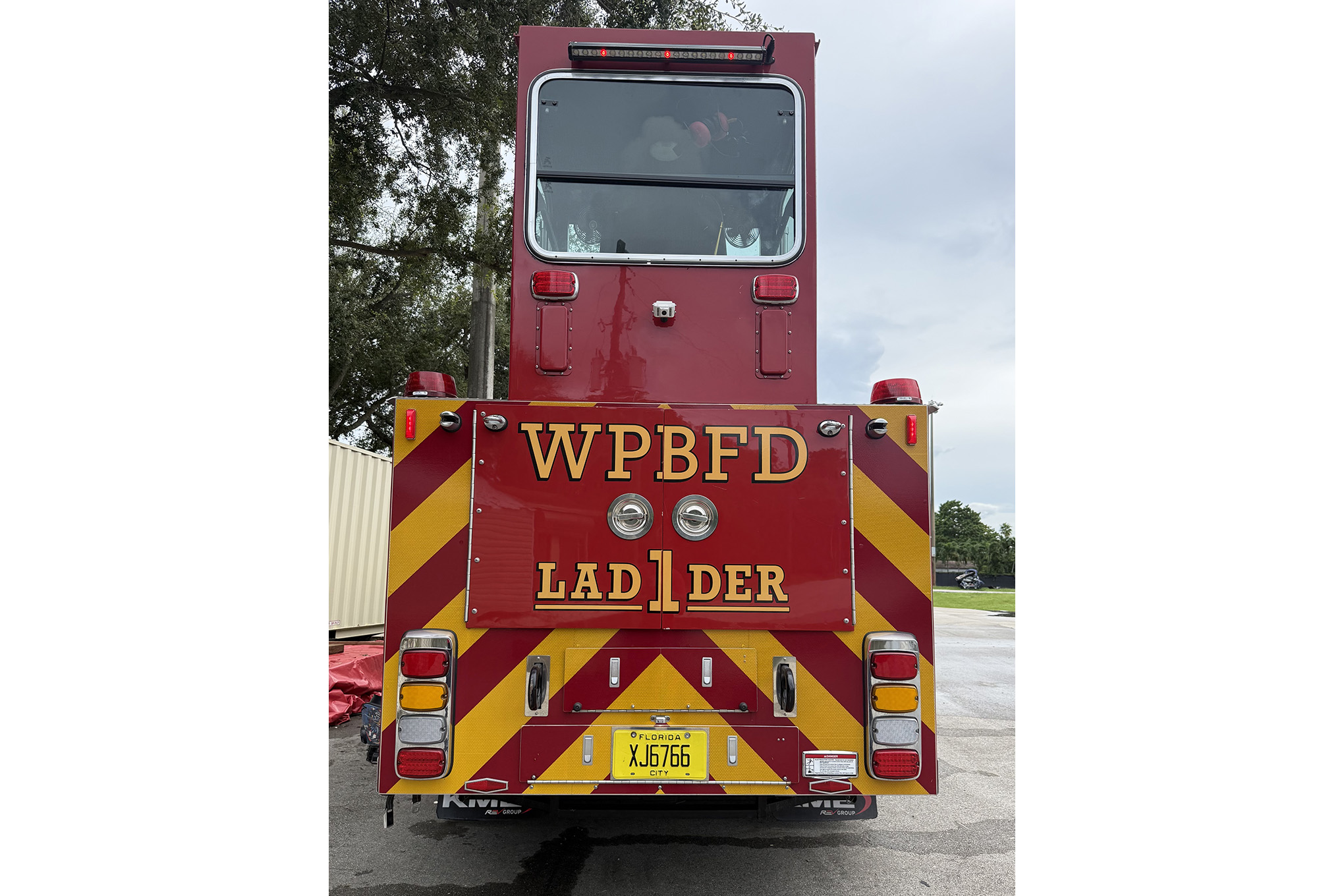
The rear view of the apparatus with DOT-compliant safety chevrons.
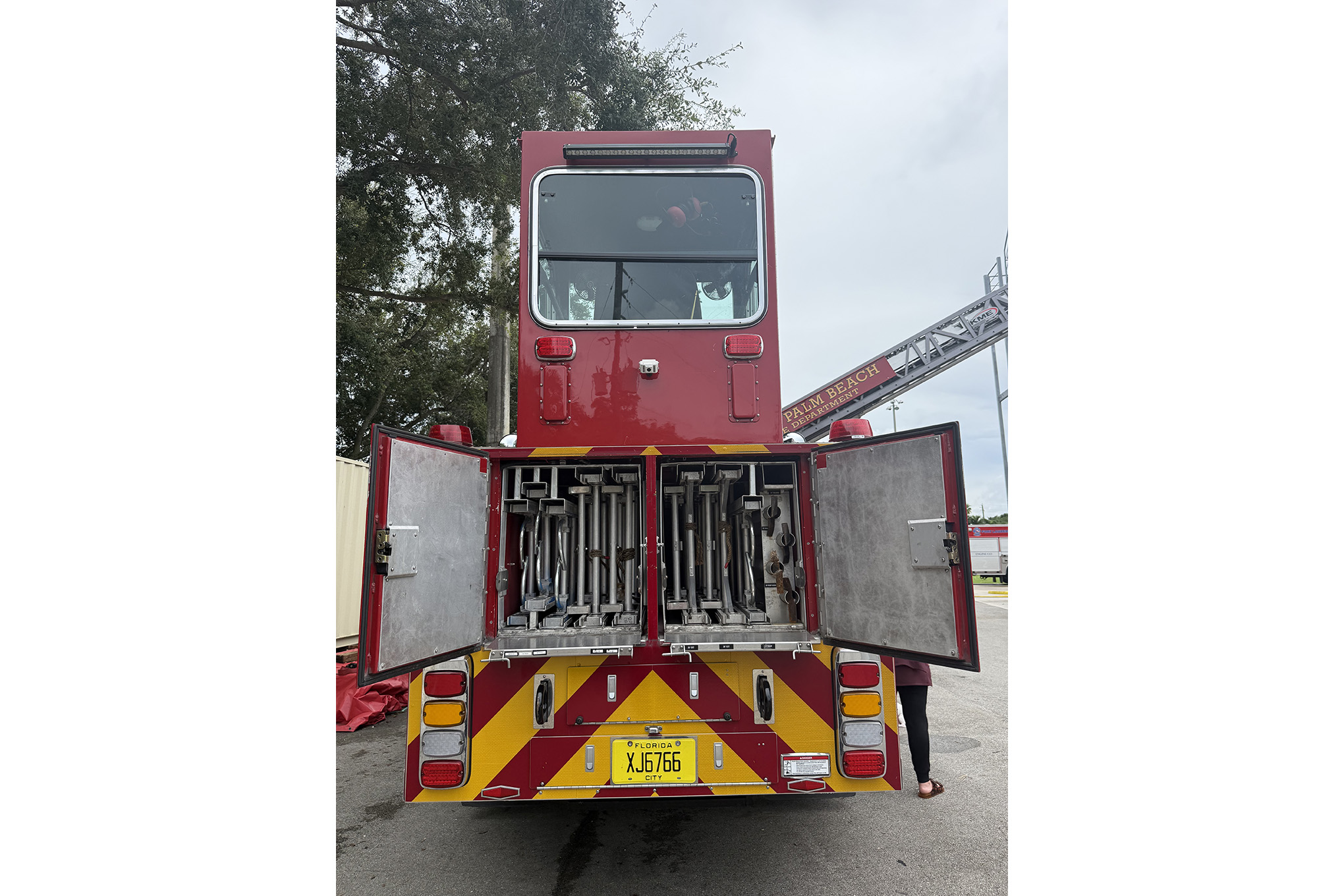
The portable ladder compartment for Ladder Company 1.
The rig is powered by a Cummins X12 500-horsepower (hp) diesel engine and Allison 4000 EVS automatic transmission. To assist with braking, the apparatus is also equipped with a Telma driveline retarder, which is an electromagnetic induction braking system integrated directly into the truck’s drivetrain. A Harrison 8-kilowatt (kW) hydraulic generator provides auxiliary electrical power for the unit’s lighting and electrical reels.
The unit is painted solid red and has three gold reflective stripes running along the cab and trailer portion of the rig. Two thinner outer stripes and a wider middle stripe help other vehicles identify the apparatus.
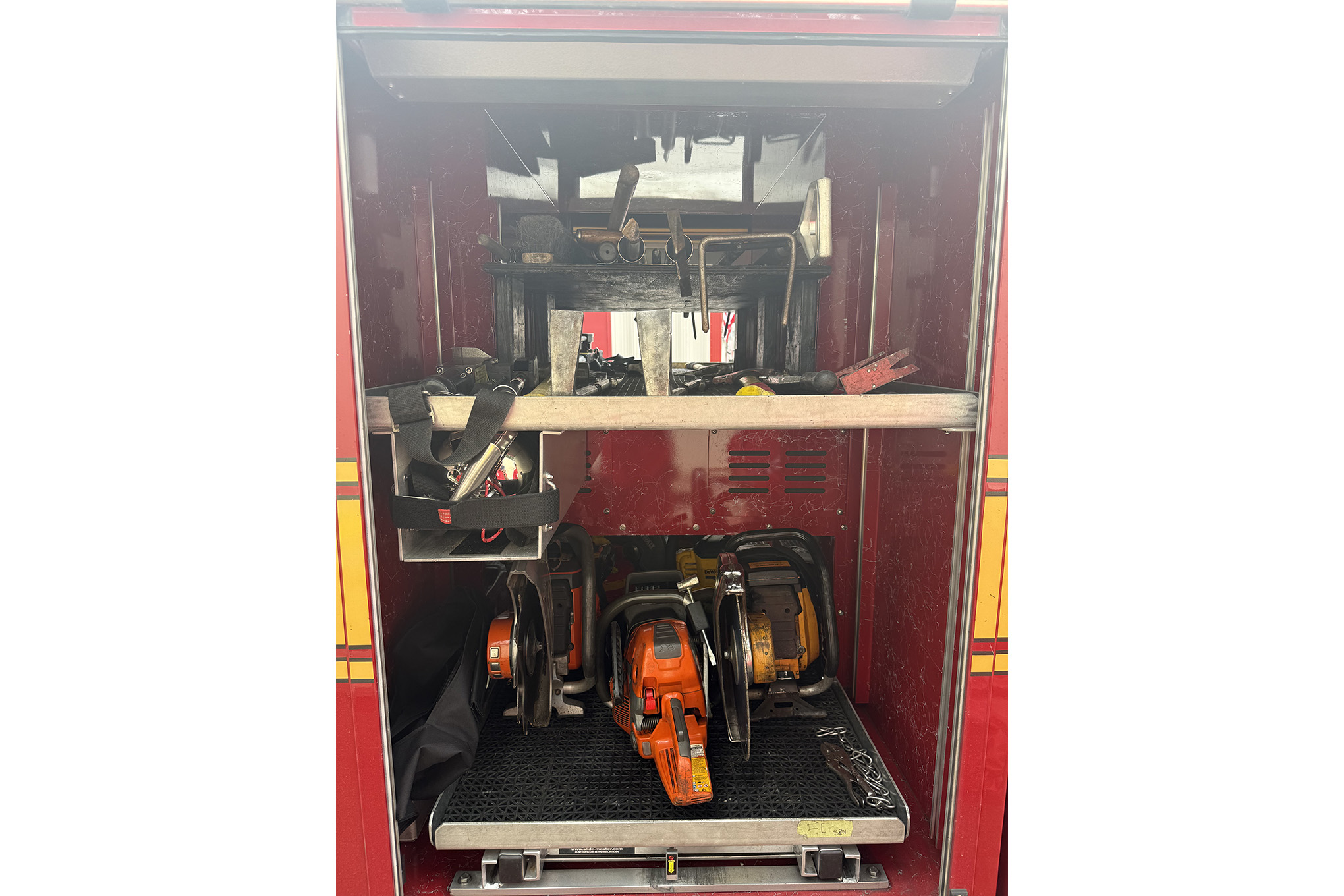
The officer’s side forcible entry compartment tool layout.
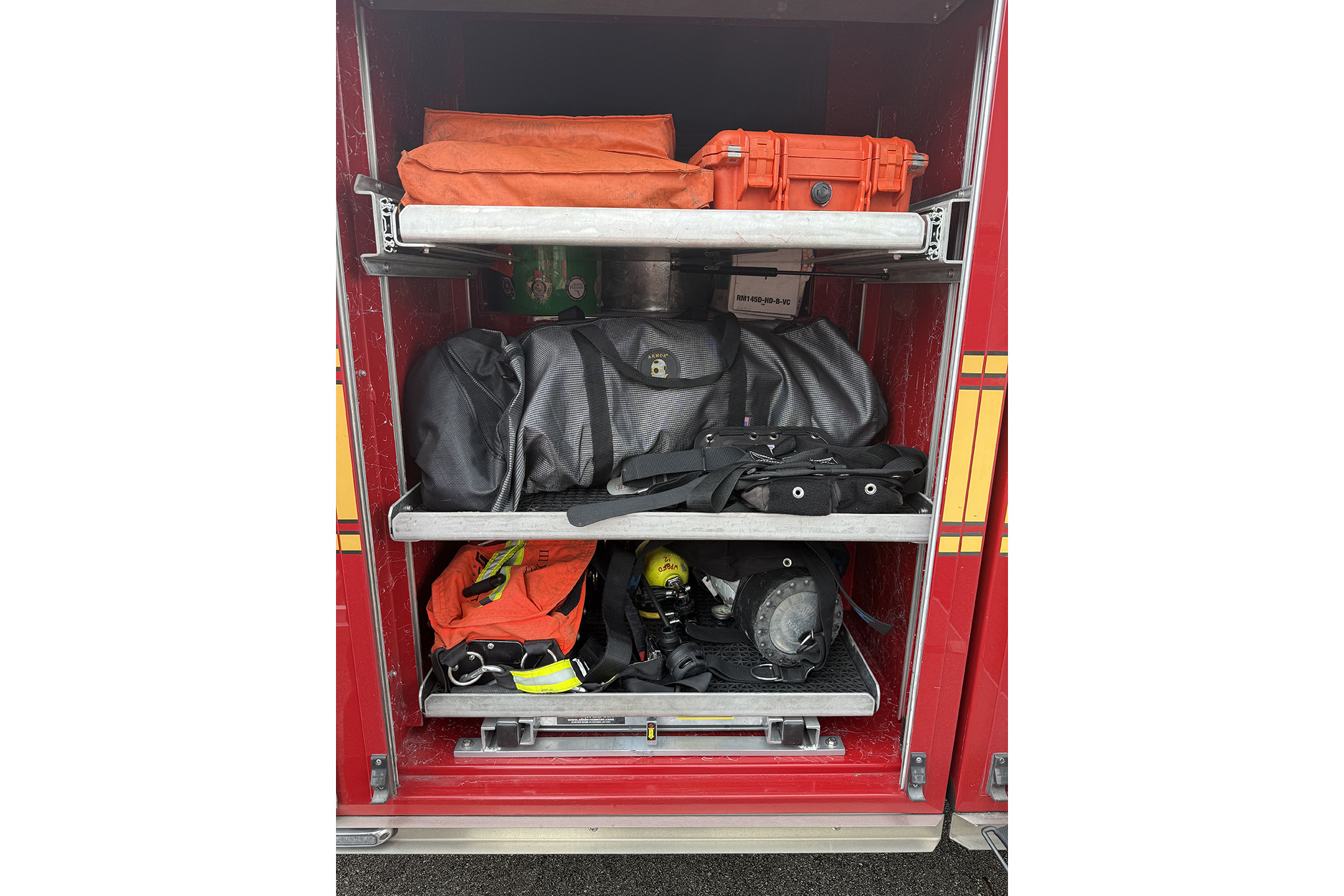
The Scuba and water rescue gear carried on the apparatus.
The cab and trailer are equipped with AMDOR roll-up compartment doors, while the trailer does have some standard bi-fold compartment doors. The ladder storage compartment is located at the rear of the trailer, which has DOT-compliant safety chevrons attached to it. The ladder trough has storage for three 16-foot and one 14-foot roof ladders, two 28-foot and two 35-foot extension ladders, and one 10-foot folding ladder. In addition, there are four 10-foot New York roof hooks stored in the compartment. To round out the rig’s ladder compliment, a Fresno ladder and Stokes basket are stored in an upper cross compartment on the trailer.
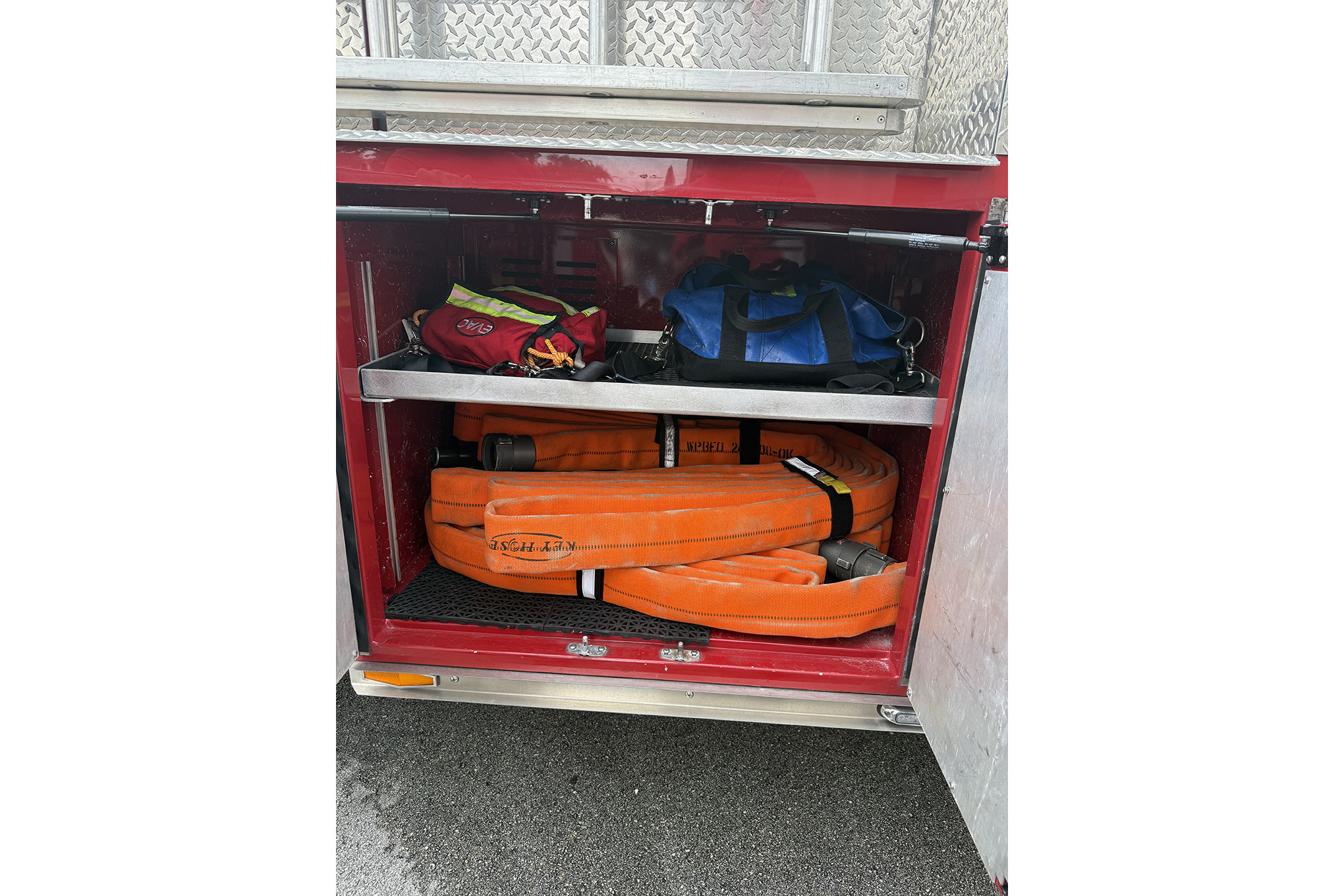
Standpipe hose, standpipe kit, and a search rope compartment.
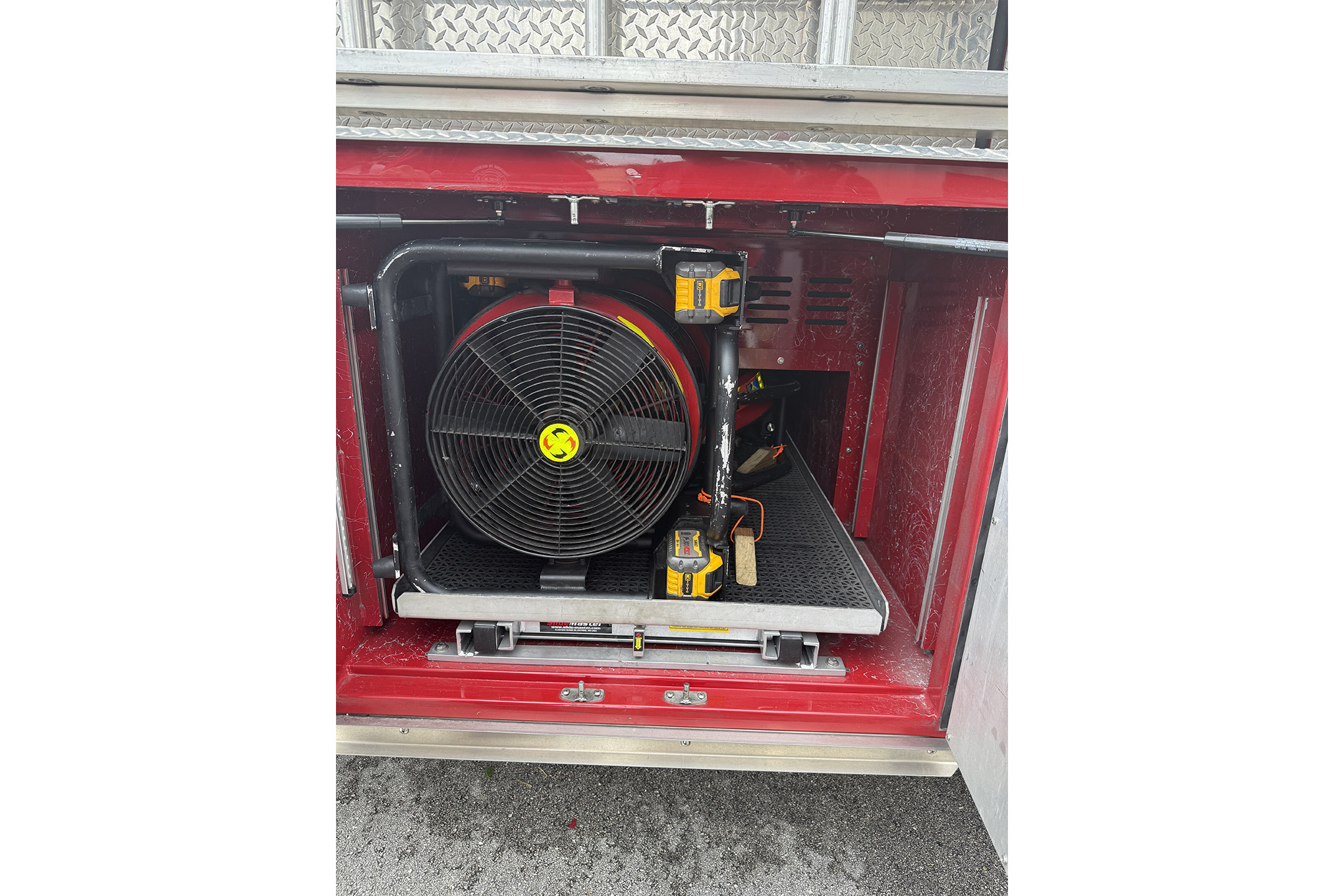
SuperVac battery-operated fans with wood chocks attached to them, for keeping doors open during ventilation, is a smart idea.
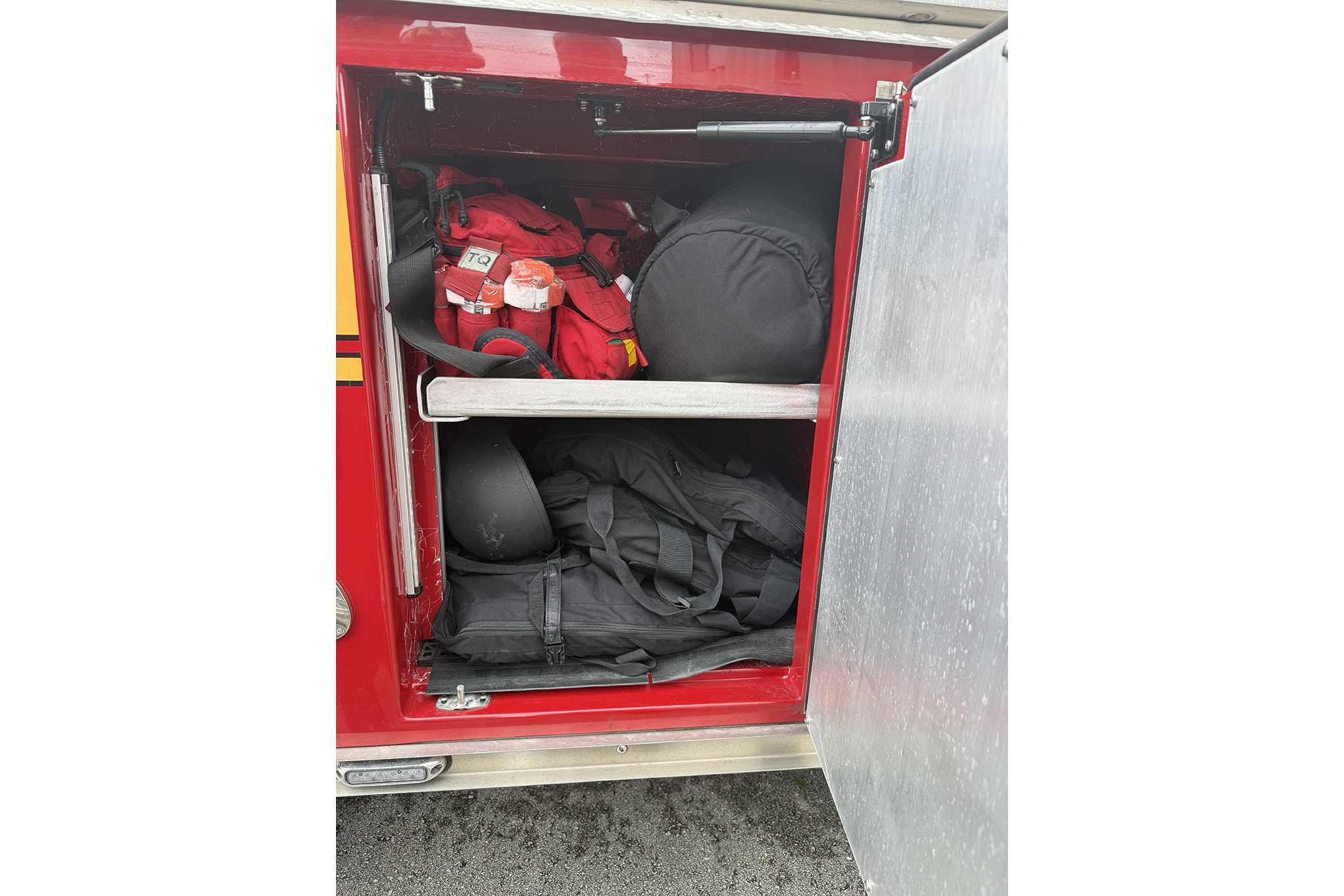
Ballistic protective equipment and first-aid equipment with tourniquets are newer items fire departments are now carrying on apparatus.
The TDA is equipped with Whelen LED emergency warning lights and a Freedom® IV LED lightbar mounted on the cab’s roof. It also is equipped with HiViz LED brow light mounted on the front of the cab, and additional scene lights mounted on the upper portion of the trailer and above the rear cab doors.
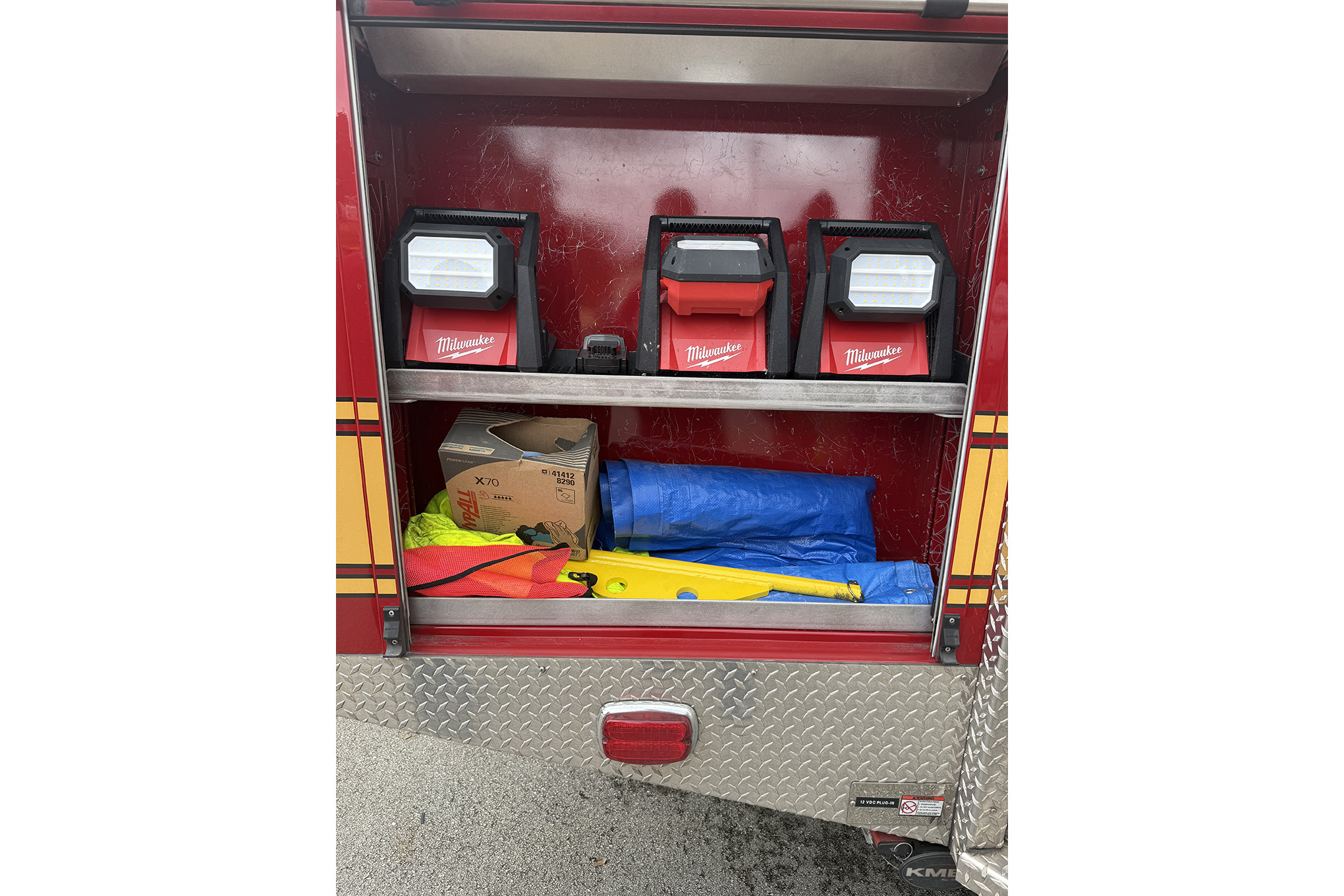
Portable battery-operated Milwaukee LED lights are also carried on the apparatus.
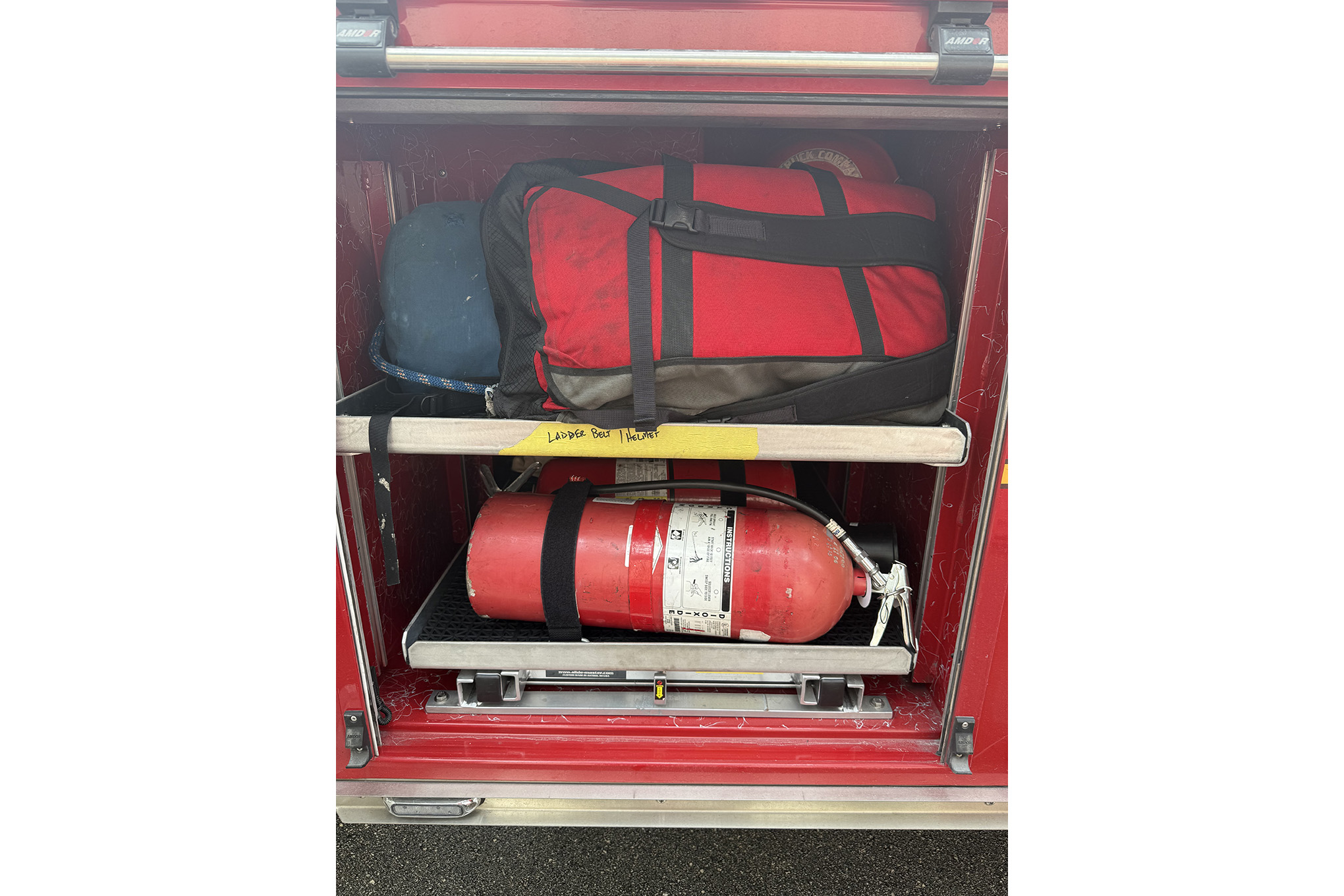
Fire extinguishers and high-angle rope equipment are stored together in this compartment.
Since the trailer has numerous compartments and space, the company can carry a wide range of tools and equipment enabling them to handle responses to numerous emergencies. This includes: firefighting, extrication, stabilization, water rescue, scuba equipment, and ballistics protective equipment.
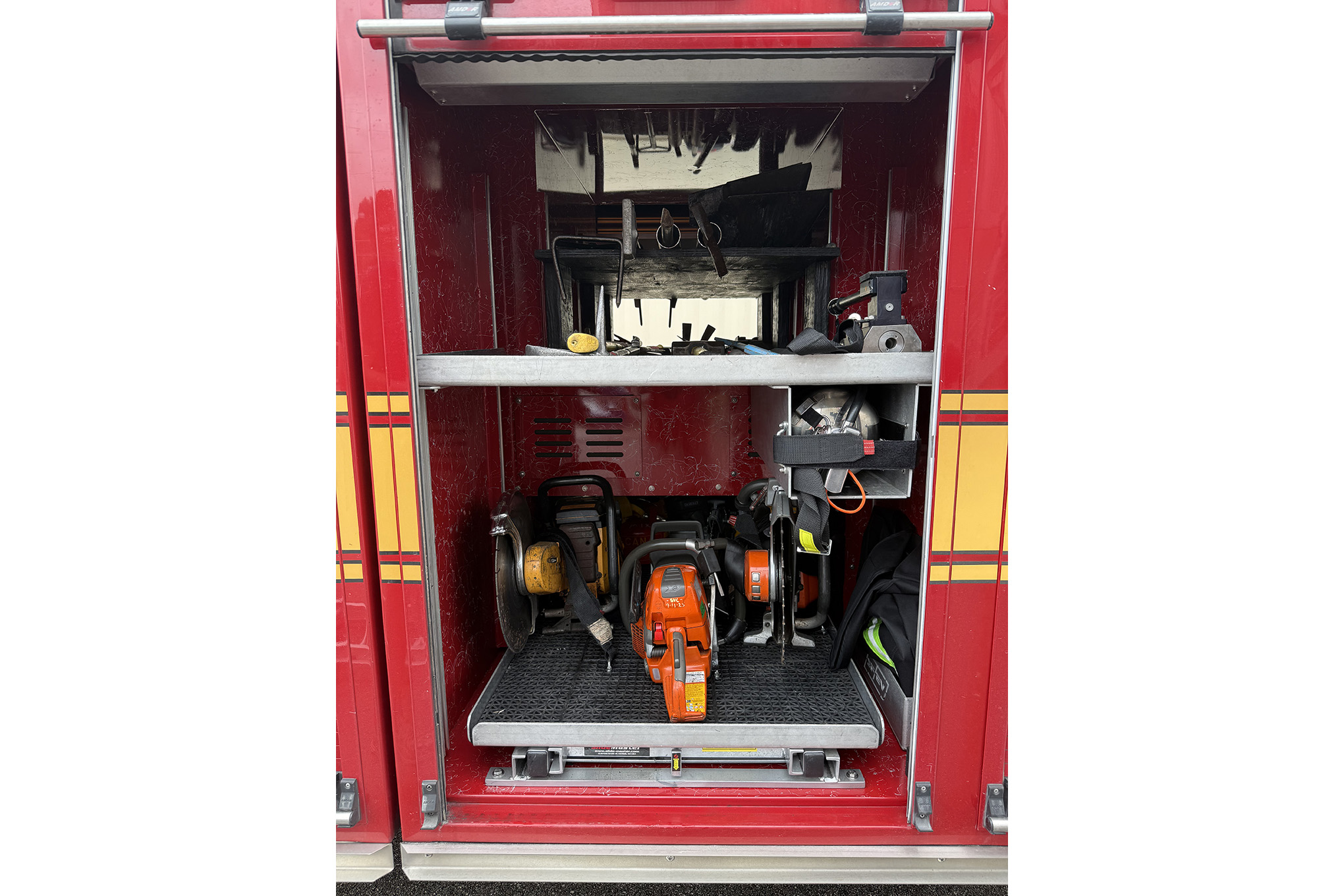
The driver’s side forcible entry compartment mirrors the opposite side of the rig.
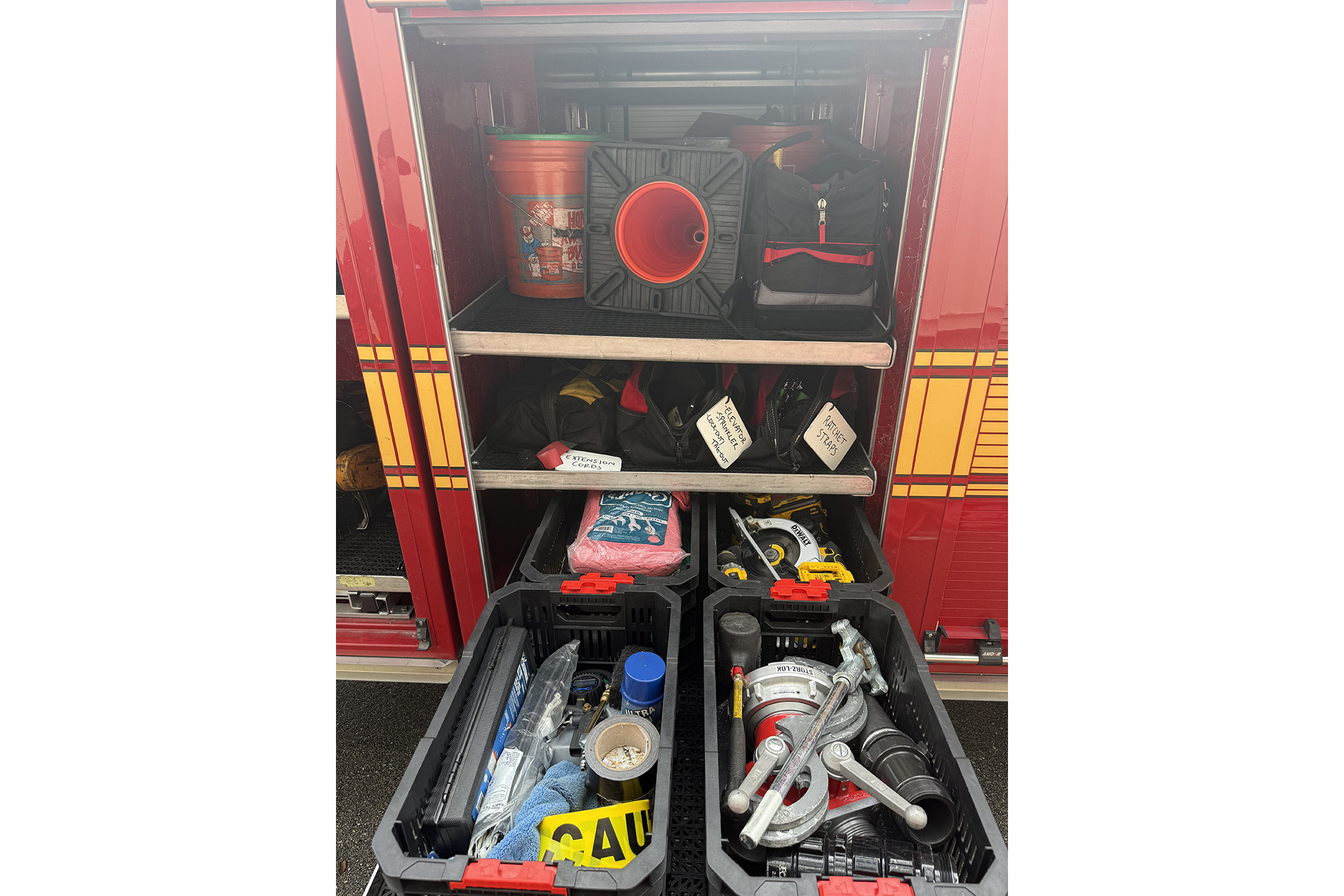
A plethora of equipment is stored in this compartment, ranging from Dewalt battery-operated tools, elevator, sprinkler, ratchet straps, electrical cords, fitting, and adaptors.
Another unique item on the apparatus is the forcible entry compartment, which is a cross-access compartment and has the same layout on each side of the rig. Three saws are carried on the lower shelf, with a pressurized water extinguisher in a boxed-out bracket and numerous hand tools on the upper tray, with various hook storage above the top tray. In this manner, crews operating on either side of the apparatus have immediate access to forcible entry tools, and if more are needed, they can retrieve them from the opposite side of the rig.
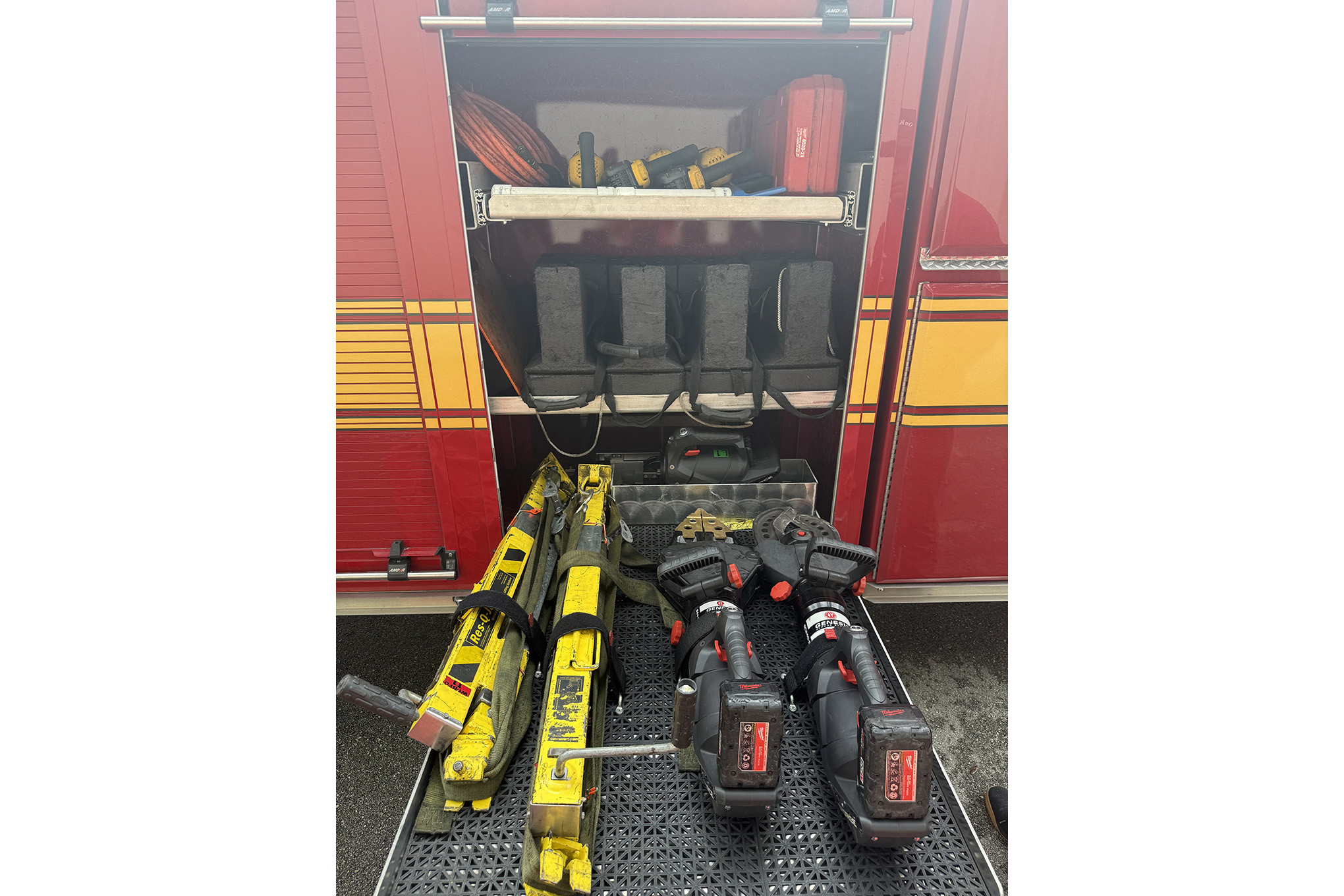
Ladder 1 carries Genesis extrication tools with Res-Q-Jack stabilization struts and DeWalt reciprocal saw in the extrication compartment.
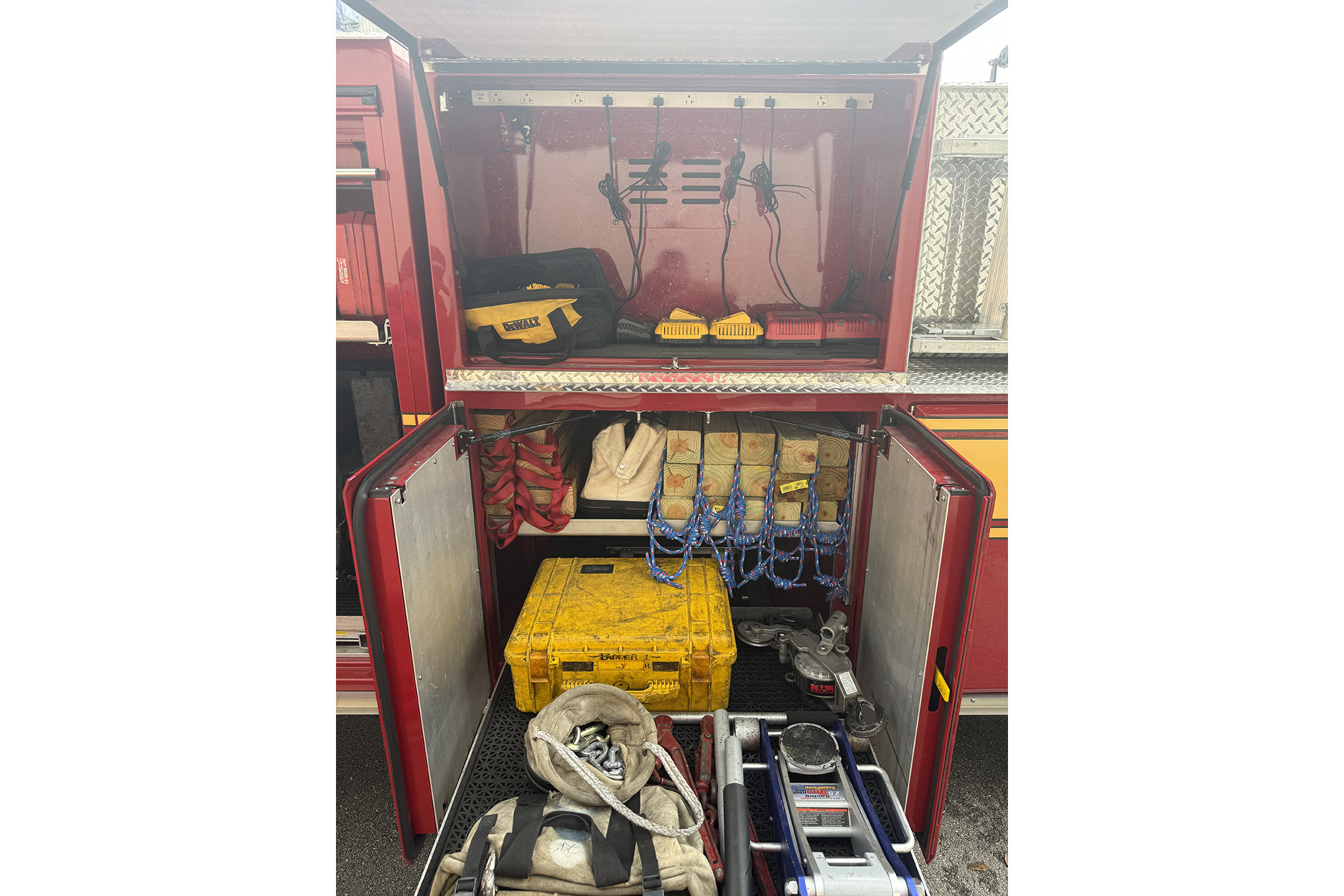
Chains, come-a-long, cribbing, a floor jack, and extra batteries are stored together.
With the addition of this TDA, the West Palm Beach Fire Department has increased its operational needs to deal with the issues of driving and operating in a tight downtown historical area, and to anywhere else the apparatus responds.
MICHAEL N. CIAMPO is a 39-year veteran of the fire service and a retired Lieutenant from the Fire Department of New York. Previously, he served with the District of Columbia Fire Department. He has a bachelor’s degree in fire science from John Jay College of Criminal Justice. He is an instructor for the FDIC International HOT program. He wrote the Ladders and Ventilation chapters for Fire Engineering’s Handbook for Firefighter 1 & 2 and the Bread-and-Butter Portable Ladders DVD. He writes the back page column On Fire in Fire Engineering and is featured in Training Minutes truck company videos on FireEngineering.com. Recently he wrote the textbook Tower Ladders, Tactics, Tips & Tales, available at mikeciampo.com.