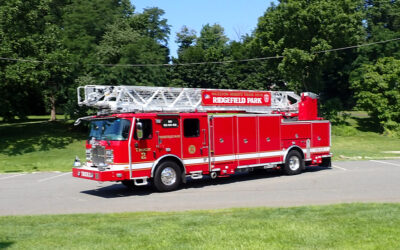
Fire departments operate some of the most demanding diesel duty cycles in the fleet world. Fire apparatus must be ready at a moment’s notice, often after long idle periods, short response runs, extended pump operations, and high-load emergency events that place extraordinary thermal and mechanical stress on engines. Unlike commercial vehicles which typically accumulate predictable miles under steady-state conditions, fire apparatus may accumulate low mileage while accruing extremely high engine hours under severe operating conditions.
Against this backdrop, the arrival of PC-12 engine oils in 2027 represents an important shift for fire fleet managers. This transition is not simply another lubricant update or a routine specification change. Instead, it reflects broader changes in engine design, emissions systems, warranty expectations, and lifecycle risk management that directly affect fire departments.
PC-12 is the industry development program behind the next heavy-duty diesel engine oil categories from the American Petroleum Institute (API), following PC-11 (CK-4 and FA-4) introduced in 2016. The regulatory landscape has also changed: The Environmental Protection Agency (EPA) rescinded federal heavy-duty greenhouse-gas standards in 2026, while the separate model-year-2027 criteria pollutant program remains in place and is under further rulemaking.
The practical issue for fire fleets is therefore broader than any single emissions mandate. New engine hardware, aftertreatment durability, lubricant performance, OEM requirements, and long-term maintenance control all continue to matter.
For fire departments, PC-12 is less about chasing marginal fuel economy gains and more about reliability, warranty protection, emissions-system durability, and operational readiness. Understanding what PC-12 brings, and how it fits into mixed-age apparatus fleets, will be critical for chiefs, fleet managers, and maintenance officers charged with keeping emergency vehicles in service for decades.
What Is PC-12?
One of the most important concepts for fire departments to understand is that PC-12 was the development program, not the final name of a single oil specification. API has finalized the two service categories developed through the PC-12 process as API CL-4 and API FB-4, and API 1509, 24th Edition (July 2026), incorporates the current Engine Oil Licensing and Certification System requirements. First licensing for CL-4 and FB-4 begins January 1, 2027.
Two primary forces drove the development of PC-12:
OEM engineering direction: Even without aggressive new EPA mandates, manufacturers such as Cummins, Detroit, and PACCAR are designing engines with higher cylinder pressures, tighter clearances, and more advanced emissions-control systems. These engines demand lubricants that can withstand greater thermal stress while maintaining viscosity, cleanliness, and wear protection.
Durability and emissions-system protection: OEMs and fleet operators alike are focused on extending engine life and protecting costly aftertreatment components. PC-12 oils are being engineered to reduce oxidation, control deposits, and limit ash-forming elements that can shorten the life of diesel particulate filters (DPFs) and selective catalytic reduction (SCR) systems.
Key Differences of PC-12 vs. PC-11 for Fire Department Fleets
Fire departments need to understand the basic differences between PC-11 and PC-12, particularly its incorporation into mixed-age apparatus fleets.
1. Improved oxidation and thermal stability. Modern diesel engines operate hotter than their predecessors, and PC-12 oils are being formulated to withstand these conditions for longer periods without thickening, shearing, or forming harmful deposits. For the fire service, this is important during extended incidents, where engines may operate at elevated loads for hours at a time.
Improved oxidation stability helps apparatus in the following ways:
- Maintains consistent oil performance during prolonged pump operations.
- Reduces varnish and sludge formation in engines with high idle time.
- Supports more predictable maintenance planning.
While PC-12 oils may support extended drain intervals in some applications, fire departments should approach drain extensions cautiously. Oil analysis remains essential, especially given the variability of fire service duty cycles.
2. Lower SAPS for aftertreatment protection. Aftertreatment systems are expensive and operationally important. PC-12 development included tighter attention to lubricant chemistry, including sulfated ash, phosphorus, and sulfur (SAPS), to support diesel particulate filter durability and modern emissions-system performance. Actual service results will still depend on engine design, duty cycle, fuel quality, preventive maintenance practices, and the specific oil formulation.
For fire apparatus, improved aftertreatment protection can result in:
- Longer DPF service life.
- Fewer forced regenerations.
- Reduced risk of emissions-related derates during emergency response.
Given the operational consequences of a derated apparatus during an incident, aftertreatment protection is a major consideration for fire fleets.
3. Viscosity changes and compatibility risk. Lower HTHS, lower-viscosity formulations intend to improve efficiency in engines designed for them. These oils should be used only where the engine manufacturer explicitly approves the API category and SAE viscosity grade.
4. Cold Starts, Idling, and Thermal Stress. Engine oil performance during cold starts and extended idle periods is critical in the fire service. PC-12 oils are designed around updated oxidation, wear, soot, and viscosity-performance requirements. Departments should still select the actual SAE viscosity grade from the engine manufacturer’s ambient-temperature and duty-cycle guidance, rather than if the new API category alone determines cold-start performance.
PC-12 oils will support the following:
- Faster oil circulation during cold starts.
- Reduced wear during dry-start conditions.
- Stable viscosity during long idle and pump operations.
Departments operating in cold climates should coordinate viscosity selection carefully, balancing cold-weather flow with high-load protection during emergency response.
PC-12’s Two Categories: API CL-4 vs. API FB-4
Like PC-11, the completed PC-12 program establishes two distinct branches:
- API CL-4, the successor to CK-4, designed as the backward-compatible C-category for broad heavy-duty diesel use, subject to OEM viscosity and application requirements.
- API FB-4, the successor to FA-4, a lower high-temperature/high-shear (HTHS) F-category intended only for engines and viscosities specifically approved by the engine manufacturer.
Confusion between the two PC-12 service categories presents a significant transition risk for the fire service, particularly those that operate mixed-age fleets. Clear differentiation between API CL-4 and API FB-4 is essential to protect engines, maintain warranty compliance, and avoid costly misapplication errors.
API CL-4 (developed as PC-12A): The direct successor to API CK-4 and is designed as the backward-compatible branch of PC-12. For the fire service, CL-4 will generally be the more universally applicable new category, but viscosity grade and OEM approval still govern the correct oil for an individual engine.
CL-4 oils emphasize:
- Enhanced oxidation resistance for high idle and extended pump operations.
- Strong wear protection under severe-duty and high-load conditions.
- Improved deposit control to support long engine service life.
- Compatibility with modern aftertreatment systems while remaining suitable for older engine designs.
From a policy and risk management perspective, CL-4 provides fire departments with a practical path forward. It enables them to adopt PC-12 while minimizing operational disruption and maintaining continuity across mixed fleets.
API FB-4 (developed as PC-12B): The specialized lower-HTHS branch intended for engines designed and approved for these oils. It is not a universal backward-compatible replacement for CK-4 or CL-4, and should be used only where the engine manufacturer explicitly approves the category and viscosity.
FB-4 oils are characterized by:
- Lower HTHS viscosity limits.
- Improved emissions and efficiency performance in approved engines.
- Tighter operating windows that require strict adherence to OEM guidance.
Fire departments must manage FB-4 as an exception-based application rather than a universal upgrade. Its lower-HTHS design can support efficiency in approved engines, but misapplication in engines not designed for it can create lubrication and warranty risks.
Why PC-12 Matters for Fire Apparatus
Fire apparatus duty cycles differ fundamentally from those of long-haul trucks or regional delivery trucks. Key characteristics include:
- High idle hours, often exceeding drive hours.
- Short response runs with frequent cold starts.
- Extended high-load pump operations during incidents.
- Long service lives, commonly ranging from 15 to 25 years.
These operating conditions place unique stresses on engine oil. Extended idling can accelerate oil oxidation and fuel dilution. Cold starts increase the risk of wear before oil reaches full circulation. Pump operations generate sustained heat loads that can rapidly degrade marginal lubricants. Over time, these factors compound, particularly in apparatus that remain in frontline service for decades.
The PC-12 performance program was developed around stronger oxidation control, wear protection, soot management, and compatibility with evolving engine and aftertreatment hardware. For the fire service, those performance priorities are relevant to engines that accumulate hours faster than miles and experience severe but intermittent duty cycles.
Expected benefits relevant to the fire service include the following:
- Improved protection during extended idling and pump operations.
- Greater resistance to viscosity breakdown under high thermal loads.
- Reduced deposit formation in engines with high idle-to-mile ratios.
- Better compatibility with modern diesel aftertreatment systems.
These benefits support not only engine longevity but also operational reliability during emergency response.
Which PC-12 Category to Use and When
For fire departments, API CL-4 likely will be the principal PC-12 category because of its backward-compatible design and durability emphasis. API FB-4 should be treated as an application-specific oil used only when OEMs explicitly authorize the category and viscosity.
Fire departments operating mixed-age fleets need to manage API CL-4 for new apparatus and, where OEM-approved, for many legacy applications. CK-4 will be for legacy engines where it remains the specified or selected service category, plus FB-4 only in explicitly approved applications. This increases the importance of clear labeling, technician training, and strict procedural controls. Misapplication of oil can lead to accelerated wear, engine damage, or warranty disputes.
Next time we’ll discuss how fire departments should prepare for PC-12’s arrival into the market in 2027, and how to update their apparatus and fleet strategies.
MATT WIEDMEYER, certified transportation professional (CTP), is a captain and training officer (ret.) and has more than 30 years of experience in fleet maintenance, transportation operations, and the fire service. His background includes directing fleet asset performance and maintenance, developing maintenance strategies, and overseeing lifecycle planning for commercial and emergency vehicle fleets.